

September 21, 2026
Secure File Sharing Guide for Canadian BusinessesLearn secure file sharing essentials for Canadian SMBs — encryption, compliance, protocols and best practices to protect data and stay compliant.
Read Full Post%20(1).webp)
Usman Malik
Chief Executive Officer
September 22, 2026
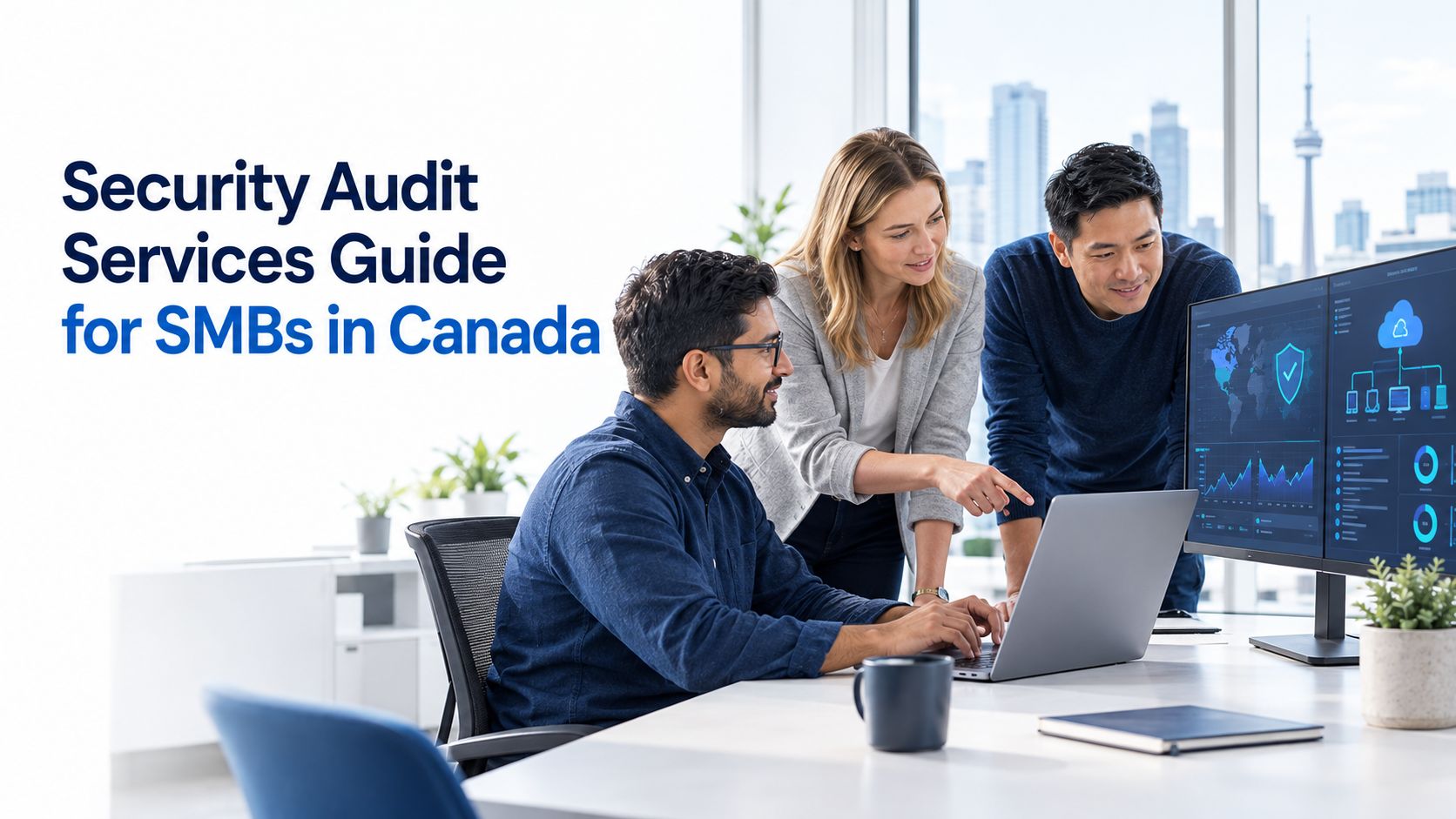
A mid-sized Canadian firm discovers that an overlooked firewall rule has exposed a business application to the internet. The team hasn't seen evidence of stolen information, but customer records, staff accounts, and shared cloud files now require urgent review. The company faces more than a technical cleanup. It may need to investigate privacy obligations, explain the incident to customers, satisfy insurers, and restore confidence with its partners.
Security audit services provide practical value. A well-scoped audit shows which controls exist, whether they work, and what the organisation should fix first. It isn't a compliance checklist or a report full of technical terms. For Canadian SMB leaders, it can become a clear decision tool for reducing risk, improving governance, and allocating limited IT resources. A useful starting point is CloudOrbis's guidance on Canadian data privacy laws, particularly when an audit involves personal information.
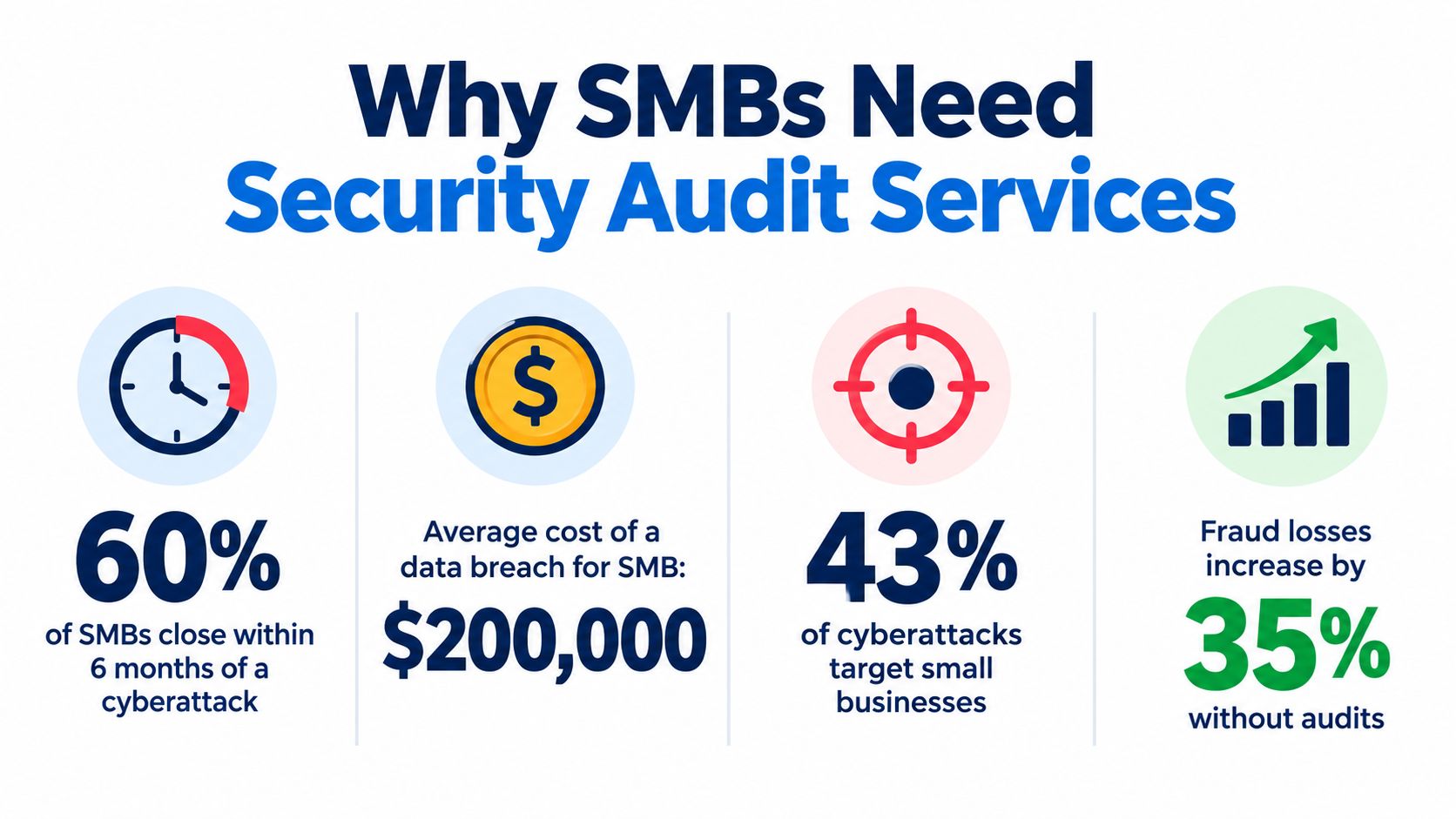
A small Canadian business may run on Microsoft 365, cloud accounting, remote access, and several external vendors. If one account or supplier connection is compromised, email, client documents, payroll records, or operational data could be exposed. The response may involve investigation, recovery, legal advice, and interrupted work, followed by questions from customers, insurers, or regulators.
Security audits matter because smaller organisations often have fewer security specialists and less time for continuous monitoring. An audit gives leaders a structured way to examine controls before an incident forces rushed decisions. It works like an inspection of a building: the goal is to find weak doors, unclear responsibilities, and missing emergency procedures before someone tries to enter.
Canadian organisations also face a reporting gap. Only 5% to 10% of cybercrimes are reported, so an incident log can make exposure appear smaller than it is. The Office of the Auditor General of Canada's audit findings adds context to why reported incidents do not represent every event.
For an SMB, the review should connect technical findings to Canadian obligations. That includes personal-information handling, data sovereignty, artificial intelligence tools, and cross-border vendors that may store or process information outside Canada. A provider can then turn findings into a remediation roadmap, with priorities, owners, dependencies, and target decisions rather than a report that sits unused. Leaders reviewing privacy responsibilities can also consult this guide to Canadian data privacy laws.
The following sections explain the service scope, business value, deliverables, timelines, and provider selection criteria.
A security audit is a structured review of an organisation's technology environment, security controls, processes, and evidence. The provider compares the current state with agreed requirements, such as internal policies, customer commitments, a recognised framework, or a regulatory obligation.
The first step is defining what the audit will examine. That could include Microsoft 365, endpoints, servers, network devices, cloud workloads, business applications, physical access, third-party suppliers, or incident response procedures. A healthcare clinic may prioritise patient information and privileged accounts, while a manufacturer may focus on production systems and remote vendor access.
The second step is evidence collection. Auditors review asset inventories, policies, access records, backup arrangements, security alerts, training records, supplier documentation, and previous incidents. Interviews with business and IT staff reveal whether documented procedures match daily practice.
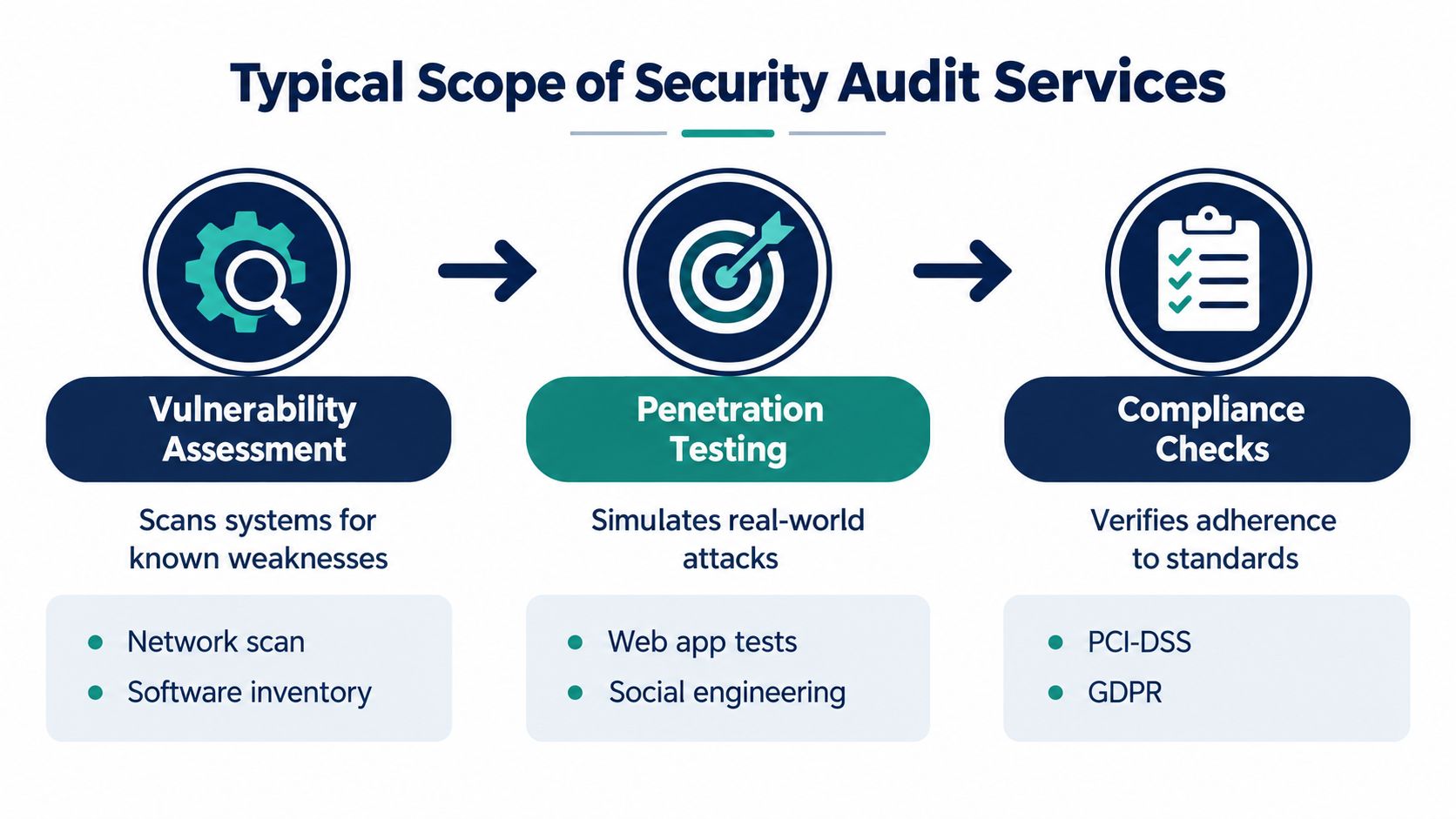
A vulnerability assessment uses automated tools to identify known weaknesses, missing updates, insecure configurations, and exposed services. A penetration test goes further by attempting controlled exploitation, within an agreed scope, to establish whether a weakness can lead to real access or impact. A compliance review checks whether required controls exist and whether the organisation can demonstrate that they operate consistently.
The Government of Canada's vulnerability-management guideline says an effective process should inventory all IT assets, use regular internal and external assessments with automated tools, add manual validation, and apply a risk matrix that scores factors out of 50 points to set testing and remediation time frames. That makes the audit part of a repeatable management loop, not a one-time scan. CloudOrbis also explains the distinction in vulnerability management versus vulnerability assessment.
The final step is reporting. A useful report connects each finding to affected assets, business consequences, evidence, recommended action, ownership, and follow-up. The result should help a leader decide what to fund and what the IT team should do next.
A payroll account is compromised on Friday afternoon. The owner cannot tell whether the attacker accessed employee records, changed supplier banking details, or used a cloud administrator account. With a small team handling several roles, the first response may depend on one person and a few undocumented steps. A security audit turns that uncertainty into a documented view of exposure, response capability, and recovery options.
Canadian incident reporting shows why preparation matters. The Canadian Centre for Cyber Security received 10 850 reports between 2021 and 2023, including potential cybercrimes involving individuals. Underreporting means those reports represent only part of the problem. For an SMB, the practical lesson is to identify which systems, accounts, and vendors could interrupt operations, then assign owners and deadlines for reducing that risk.
Ontario has established a significant reference point for cyber security governance. Under Ontario Regulation 51/26, prescribed public-sector entities must complete an initial cyber security maturity assessment within one year of the regulation applying to them, repeat it at least every two years, and submit a summary to the ministry within 30 business days of completion.
Most private SMBs will not fall directly within that prescribed public-sector scope. The direction still affects companies that sell to government or other regulated customers. Contracts and due diligence may require evidence of controls, testing, incident procedures, and remediation progress.
An audit also helps management build a remediation roadmap. Findings can be ranked by business impact, assigned to an owner, and tied to a target date rather than left as a technical list. The review should include AI tools, where they store and process data, Canadian data-sovereignty expectations, and cross-border vendor access. CloudOrbis's cyber security best practices for business provides related guidance for building those controls.
That roadmap supports privacy accountability, insurance discussions, customer assurance, and board reporting. It also gives leaders a clearer basis for deciding what to fix first and what evidence to retain.
The right audit scope depends on the organisation's systems, data, obligations, and risk tolerance. A provider shouldn't begin by selling a fixed package without understanding the environment. Instead, the engagement should define boundaries, testing methods, access arrangements, evidence requirements, and rules for handling sensitive information.
The assessment begins with an inventory. The auditor identifies endpoints, servers, network devices, applications, cloud resources, user accounts, and other assets that could affect the business. Automated tools can then look for missing patches, weak configurations, unsupported software, exposed services, and known vulnerabilities.
Automation provides breadth, but it can't interpret every result correctly. Manual validation helps distinguish a genuine exploitable weakness from a false positive and can reveal issues that scanners miss. For example, a scan may identify an outdated component, while manual review determines whether the component is reachable, connected to sensitive data, or protected by another control.
Penetration testing simulates an authorised attack. The provider may test an external perimeter, web application, wireless network, cloud configuration, or selected internal systems. The engagement should clearly state what is allowed, what is excluded, how testing will avoid disruption, and who receives urgent findings.
A web application test might examine authentication, session handling, authorisation, input validation, and exposed administrative functions. A social engineering exercise may assess whether staff follow identity-verification procedures. These tests don't replace routine vulnerability management. They answer a different question: can a weakness be used in a realistic attack path?
For a practical explanation of this service, see CloudOrbis's page on penetration testing services.
Compliance checks map controls to the requirements that apply to the organisation. A provider may review privacy processes, payment environments, contractual security clauses, ISO 27001 practices, NIST guidance, or customer-specific requirements. The auditor should also test operating effectiveness, because a written policy doesn't prove that staff follow it.
Ontario's regulated public-sector model reinforces this distinction. A maturity assessment requires documented evidence, a summary, and recurring review rather than a one-time declaration. Organisations handling sensitive records can also use resources such as the PatientNotes documentation audit checklist to organise evidence and identify documentation gaps.
A modern scope should include Microsoft 365 settings, identity protection, multifactor authentication, privileged access, sharing permissions, backup recovery, logging, and third-party access. It should also examine whether vendors store or process information outside Canada and whether contracts explain security responsibilities.
Practical rule: If a provider can access your data, connect to your environment, or affect service availability, include that relationship in the audit scope.
A professional audit should produce more than a severity list. Senior leaders need a concise explanation of business exposure, while technical teams need enough detail to reproduce findings and fix them. The strongest engagements create a shared record that management, IT, compliance, and external providers can use together.
The executive summary explains the overall security position in plain language. It should identify the most important risks, affected business services, likely consequences, and decisions that require leadership attention.
The detailed report contains technical evidence. Each finding should identify the affected asset or process, the observed condition, the risk, supporting evidence, and a recommended treatment. A risk matrix then helps compare likelihood and impact so the team can sequence work rather than react to whichever issue sounds most alarming.
The most valuable output is an actionable remediation roadmap. It should assign an owner, define the required fix, identify dependencies, set a target date, and record the evidence needed for closure. The Government of Canada's guidance supports this approach by connecting assessment results with remediation time frames and plans of action and milestones.
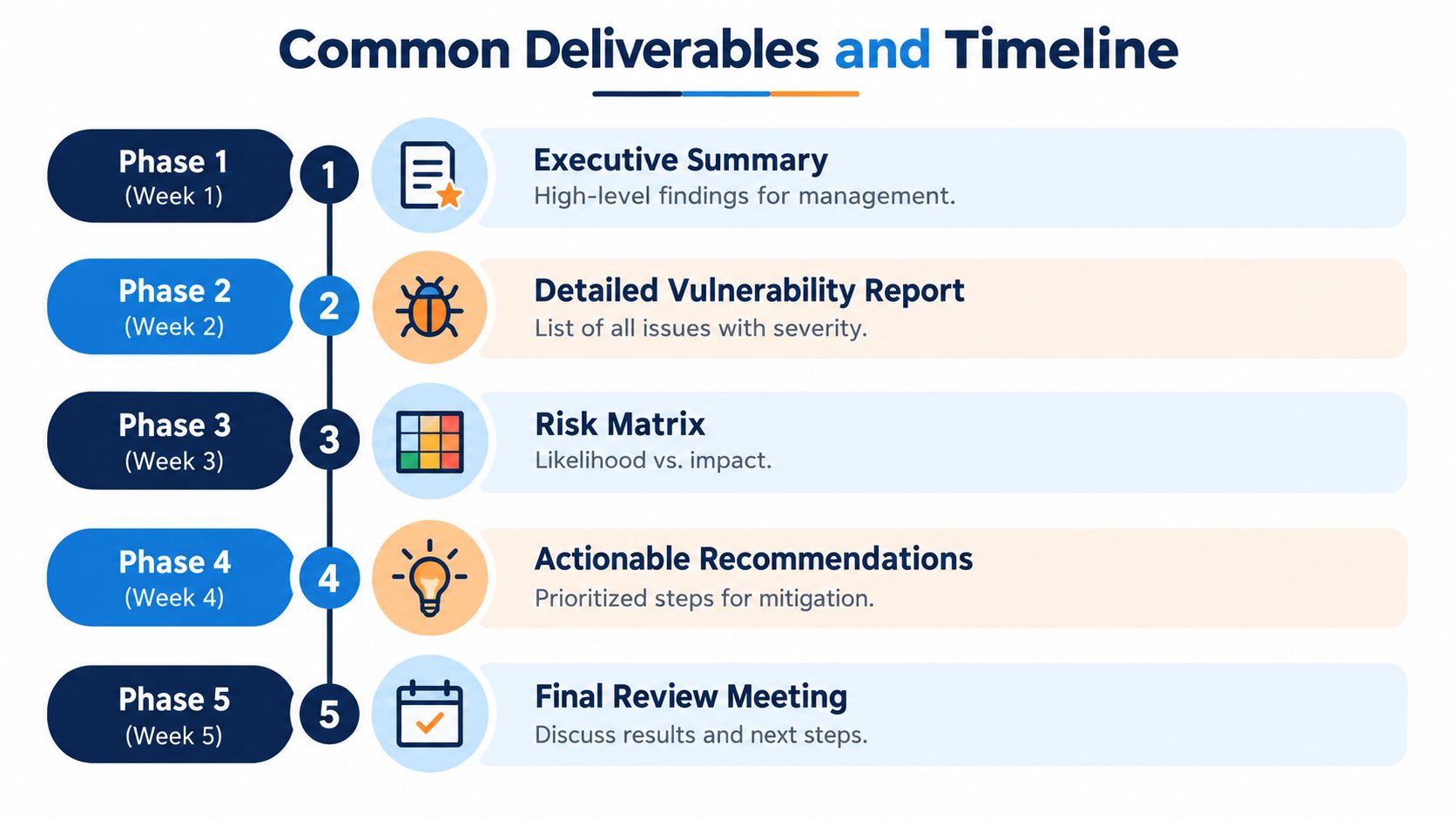
The engagement usually moves through several practical stages:
The exact schedule depends on scope, access, system complexity, and how quickly staff can provide evidence. A mature provider will explain those dependencies before work begins instead of promising a rigid calendar that ignores operational realities.
Canadian SMB maturity data highlights why the roadmap matters. Only 26% of Canadian businesses had written cybersecurity policies, while 47% felt prepared for an attack and 48% had implemented any cyber defence, according to Cybersecurity Canada's 2026 report. A report that doesn't translate findings into owners and practical tasks will leave many organisations with the same problem they had before the audit.
A provider's technical vocabulary won't tell you whether its work will help your business. Evaluate how it scopes engagements, validates findings, explains risk, protects evidence, and supports remediation.
A boutique consultancy may offer deep specialist testing and a highly focused engagement. A managed service provider may combine audit work with ongoing monitoring, endpoint protection, backup, and remediation support. A specialist penetration-testing firm may be appropriate when you need an independent test of a particular application or environment.
The right choice depends on the gap you need to close. Ask whether the provider can work with your internal staff, existing Microsoft 365 tenant, cloud platforms, line-of-business applications, and external vendors. For organisations comparing outsourced operating models, this resource on security outsourcing for property managers offers useful questions that also apply to other SMB environments.
Data location and supplier relationships deserve direct attention. Recent Canadian survey findings report that 69% of organisations cite data sovereignty as the most important sourcing factor, 56% have reconsidered U.S. vendors, 70% are concerned about new AI cyber threats, and 65% have integrated AI tools into workflows. These figures are reported in Cybersecurity Canada's key findings.
A provider should ask where Microsoft 365, Copilot, collaboration, backup, and artificial intelligence tools store and process information. It should review tenant permissions, data-sharing settings, retention, logging, vendor contracts, subprocessors, and cross-border access. It should also test whether your organisation has rules for entering confidential information into AI tools and a process for approving new applications.
Use these questions during proposal review:
CloudOrbis provides cyber security services that include assessments and ongoing security support. Treat any provider as a candidate to evaluate against your scope, evidence requirements, and operating model.
Security audit services give Canadian SMB leaders a practical view of technical weaknesses, governance gaps, compliance exposure, and third-party risk. The right engagement tests controls, validates findings, and produces a remediation roadmap with owners and priorities. It should also address cloud services, AI use, data sovereignty, vendor access, backups, and incident response.
Start by listing critical systems, sensitive information, key suppliers, and known concerns. Then ask prospective providers for a clear scope, evidence plan, reporting sample, and follow-up method. CloudOrbis can help organisations turn audit findings into an organised security programme rather than a report that sits unused.
CloudOrbis Inc. provides security audits, vulnerability assessments, compliance support, cloud security, backup planning, and ongoing managed IT services for Canadian SMBs. Visit CloudOrbis Inc. to request a free audit readiness assessment and discuss a practical path from current gaps to accountable remediation.
September 21, 2026
Secure File Sharing Guide for Canadian BusinessesLearn secure file sharing essentials for Canadian SMBs — encryption, compliance, protocols and best practices to protect data and stay compliant.
Read Full Post
September 20, 2026
Disaster Recovery Plan Business Continuity for SMBsBuild a disaster recovery plan business continuity strategy tailored for Canadian SMBs. Covers risk assessment, RTO/RPO, backup, testing, and ownership.
Read Full Post
September 19, 2026
Database Migration Services Explained for Canadian SMBsLearn how database migration services move data to the cloud securely with minimal downtime. Types, risks, costs and a Canadian provider checklist.
Read Full Post
