

September 21, 2026
Secure File Sharing Guide for Canadian BusinessesLearn secure file sharing essentials for Canadian SMBs — encryption, compliance, protocols and best practices to protect data and stay compliant.
Read Full Post%20(1).webp)
Usman Malik
Chief Executive Officer
February 7, 2026

In Edmonton, the conversation around business technology is evolving. Many local organizations are realizing that the traditional in-house, break-fix IT model is no longer sufficient. The shift toward partnering with a managed service provider (MSP) is gaining significant momentum—and for good reason. It’s a strategic move to sharpen your competitive edge, strengthen security, and enable sustainable growth.
This guide will walk you through the essential steps for selecting the right MSP in Edmonton, ensuring you find a partner that aligns with your specific business goals.

From logistics firms near the airport to healthcare clinics in the city centre, Edmonton businesses are moving away from a reactive approach to technology. This change reflects a new perspective: IT is no longer just a cost centre that demands attention only when something breaks. Instead, it’s a powerful asset that can drive business forward.
Partnering with a dedicated MSP makes this vision a reality. It frees your team from the endless cycle of troubleshooting minor issues and managing software updates, allowing them to focus on high-value projects that contribute directly to your bottom line.
Even the most dedicated in-house team cannot be an expert in every aspect of technology. They are often stretched thin, trying to keep up with emerging tech and the latest cyber threats. An MSP provides immediate access to a deep bench of specialists in critical areas like cybersecurity, cloud architecture, and data compliance.
This expertise translates into proactive management. Instead of waiting for a system to fail and cause costly downtime, an MSP continuously monitors your network, identifies potential problems, and resolves them before they can affect your operations. The impact of this approach is substantial; you can explore the specific benefits of managed IT services in our detailed article.
This model is particularly effective for key industries in Edmonton, each with its own unique challenges:
An effective MSP doesn’t just resolve technical issues. They work to align your technology with your business goals, turning potential IT challenges into a measurable competitive advantage.
The managed IT services landscape in Edmonton is vibrant, reflecting a strong local market that understands the needs of its core industries. This is part of a larger national trend where managed IT infrastructure commands a significant 32.5% market share.
This growth is expected to bring more advanced solutions to Edmonton's crucial oil & gas and logistics sectors, particularly through co-managed services and specialized Microsoft 365 optimization. It’s a clear indication that local businesses are investing in technology to gain a competitive advantage.
Engaging with a potential MSP in Edmonton without a clear understanding of your requirements can lead to inefficient spending. It’s like grocery shopping while hungry—you’re likely to leave with a cart full of items you don’t really need.
Before evaluating providers, it's essential to develop a clear internal framework of your needs.
This process begins with a practical, honest assessment of your current IT environment. A great starting point is to review your helpdesk tickets from the last six months. Are the same problems recurring? Is your team constantly dealing with slow network speeds, printer issues, or software that underperforms? These patterns reveal your most significant operational pain points.
Addressing current issues is only half the equation; you also need to look ahead.
Where do you see the business in two years? Five years? Perhaps you plan to open a new office, expand your remote workforce, or implement a new ERP system. Your IT infrastructure must be prepared to support these goals, not hinder them.
Documenting these needs is critical. This isn't just a mental checklist; it's a concrete document you can provide to potential MSPs. When every provider quotes based on the same set of requirements, you can accurately compare their proposals on a level playing field.
Your requirements document should include specifics such as:
By defining your needs first, you shift the conversation from "What services do you sell?" to "How can you solve our specific business challenges?" This ensures you invest in a partnership truly built around your objectives.
This internal audit does more than prepare you for meetings; it lays the foundation for true strategic alignment.
When technology directly serves your business goals, it transforms from a reactive cost centre into a catalyst for growth and efficiency. A well-defined plan helps a prospective MSP understand your vision and propose solutions that will help you achieve it faster.
This is a core component of successful IT management. To see how this works in practice, you can learn more about our approach to business technology alignment and how it creates genuine, long-term value. Investing this time upfront makes all the difference in finding a partner who understands not just your technology, but your entire business.

In today's high-threat environment, not all IT support is equal. When evaluating a potential MSP in Edmonton, it’s crucial to look beyond marketing materials and verify their technical capabilities and cybersecurity expertise.
This involves confirming their real-world capabilities, not just taking their word for it. A provider’s ability to protect your business depends on two key factors: their proactive security measures and their plan for handling a worst-case scenario.
This is more important than ever. Canada's IT services market is projected to reach USD 72.2 billion by 2034, a surge driven by cloud adoption and the demand for stronger cybersecurity. For Edmonton’s key industries, this translates to a growing need for specialized support, such as co-managed security for oil & gas firms or compliant data backups for healthcare providers. For a deeper analysis of these trends, you can review the full report on Canada's IT services market.
A top-tier MSP doesn’t wait for something to go wrong; they actively work to prevent problems before they occur. Their security strategy should be multi-layered and built on a foundation of continuous vigilance.
Ask specific questions about their security operations. How, exactly, do they handle threat detection and manage vulnerabilities? Vague, high-level answers are insufficient. You need to understand the specific tools and processes they have in place.
Key areas to investigate include:
A great MSP can clearly articulate their security strategy and demonstrate how it protects your business around the clock. If they cannot explain it in simple terms, they may not have a robust plan.
The technology an MSP uses and the qualifications of their team are direct indicators of their capabilities. When a provider partners with industry leaders like Microsoft, Fortinet, or SentinelOne, it demonstrates a commitment to using proven, effective solutions.
Don't hesitate to ask about their team's credentials. Are their technicians certified in modern security frameworks or key technologies? Certifications such as CompTIA Security+, Certified Information Systems Security Professional (CISSP), or vendor-specific credentials prove a commitment to professional development and technical expertise.
This vetting process is even more critical for businesses in regulated industries like finance, law, or healthcare. You need an MSP that understands the specific compliance regulations you are subject to, such as PIPEDA. Ask for case studies or references from other clients in your sector. Their experience in protecting sensitive data and meeting legal obligations is non-negotiable.
This deep dive into their security posture is how you build a resilient partnership. To get a better understanding of what a strong security offering includes, take a look at our guide on cybersecurity services in Edmonton.
The Service Level Agreement (SLA) is much more than a standard contract. It is the rulebook that governs your entire relationship with an MSP. This document establishes the expectations for service, support, and performance, making it essential to understand the details before you sign.
A well-drafted SLA acts as your business's safety net. It prevents a minor IT issue from escalating into hours of costly downtime by defining exactly what you can expect when something goes wrong. It ensures both parties are on the same page from day one.
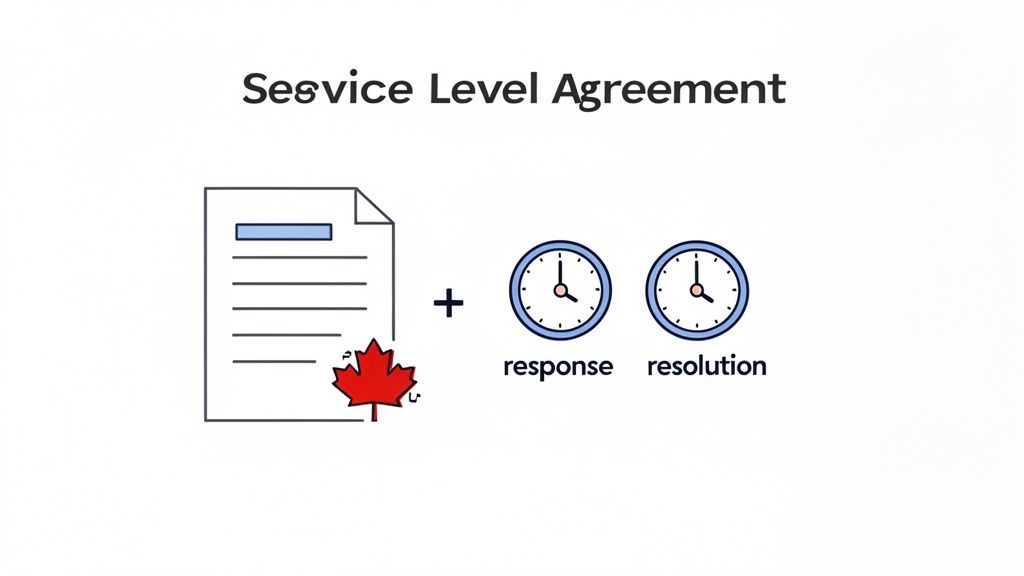
One of the most common and important points of confusion in an SLA is the distinction between "response time" and "resolution time." While they sound similar, they represent two very different commitments.
Imagine your primary server goes down on a Friday afternoon. A quick response is an automated email confirming receipt of your ticket. A strong resolution guarantee means the provider is contractually obligated to restore service within a specific timeframe, such as four hours.
When reviewing an SLA, always look for clearly defined resolution times for different issue priorities. Vague promises of a "prompt response" are not enough; you need a firm commitment to resolving problems.
Not all support models are the same, and availability can vary significantly. Your SLA will specify the MSP’s hours of operation, and you must ensure they align with your business needs. If your team works evenings or weekends, a standard 9-to-5 helpdesk will leave you unprotected when you need support most. True 24/7/365 support means a qualified technician is available anytime, day or night.
For any business in Edmonton, another key consideration is data sovereignty—where is the helpdesk physically located?
Choosing an MSP in Edmonton with a 100% Canada-based helpdesk offers significant advantages. It guarantees that your support tickets and sensitive data are not routed outside the country, keeping everything under the protection of Canadian privacy laws like PIPEDA. This localization provides peace of mind and simplifies your compliance efforts.
To better understand what differentiates various providers, read our guide on what to look for in managed IT service companies.
Before you sign, ensure you have asked the right questions to understand the level of support you are receiving.
Use this checklist to evaluate the support structure and contractual guarantees of a potential managed service provider in Edmonton.
Receiving clear, direct answers to these questions will provide a much better picture of what a partnership with an MSP will look like. It helps move the conversation beyond marketing promises to concrete, legally binding commitments.
While a sales presentation may be compelling, an MSP’s onboarding process reveals their true operational effectiveness. A disorganized transition can disrupt your entire business, frustrating your team and reducing productivity from the start. This first step sets the tone for the entire partnership.
A top-tier MSP in Edmonton will not just tell you they have a plan; they will show it to you. They should have a clear, documented onboarding process and be able to walk you through every step, from the initial network assessment to final user training. A smooth migration is the result of meticulous planning.
The onboarding process should be a collaborative project, not something done to you. Look for an MSP that invests the time to understand your unique workflows and custom applications before making any changes.
Their plan should map out key milestones, including:
This structured approach demonstrates respect for your business operations. Remember, the evaluation doesn't end after signing the contract. It's also critical to know how to effectively evaluate your Managed Service Provider's performance over the long term to ensure they are meeting their commitments.
Speaking with an MSP’s current clients is the best way to get an unfiltered perspective. However, simply asking, "Are you happy with them?" is a missed opportunity. To gain deep insights, you need to dig deeper.
Instead of broad questions, get specific. Frame your inquiries around real-world scenarios to understand how they perform under pressure.
Focus on questions that reveal an MSP's character under pressure. How they handle a crisis, communicate proactively, and contribute strategically is far more telling than their marketing claims.
For instance, ask a reference: "Can you tell me about a time they solved a difficult or unexpected IT problem for you? How was their communication during the process?"
This single question can reveal volumes about their problem-solving skills, communication style, and performance when it counts. Learning how to get more out of your IT provider starts with knowing what to expect, and references are your best source for that ground-level truth. This level of due diligence helps confirm you’re choosing a partner who can deliver on their promises.
You have conducted your research, attended meetings, and weighed your options. Now, you are ready to make a confident choice. Before signing any contracts, a final checklist is the best way to ensure you haven’t overlooked any critical details.
This is your last chance to confirm that the MSP’s offerings align with your business needs and future goals. It’s about verifying the fine print and ensuring their culture is a good fit for your team.
This simple breakdown shows the key stages of vetting a provider, from initial assessment to final reference checks.
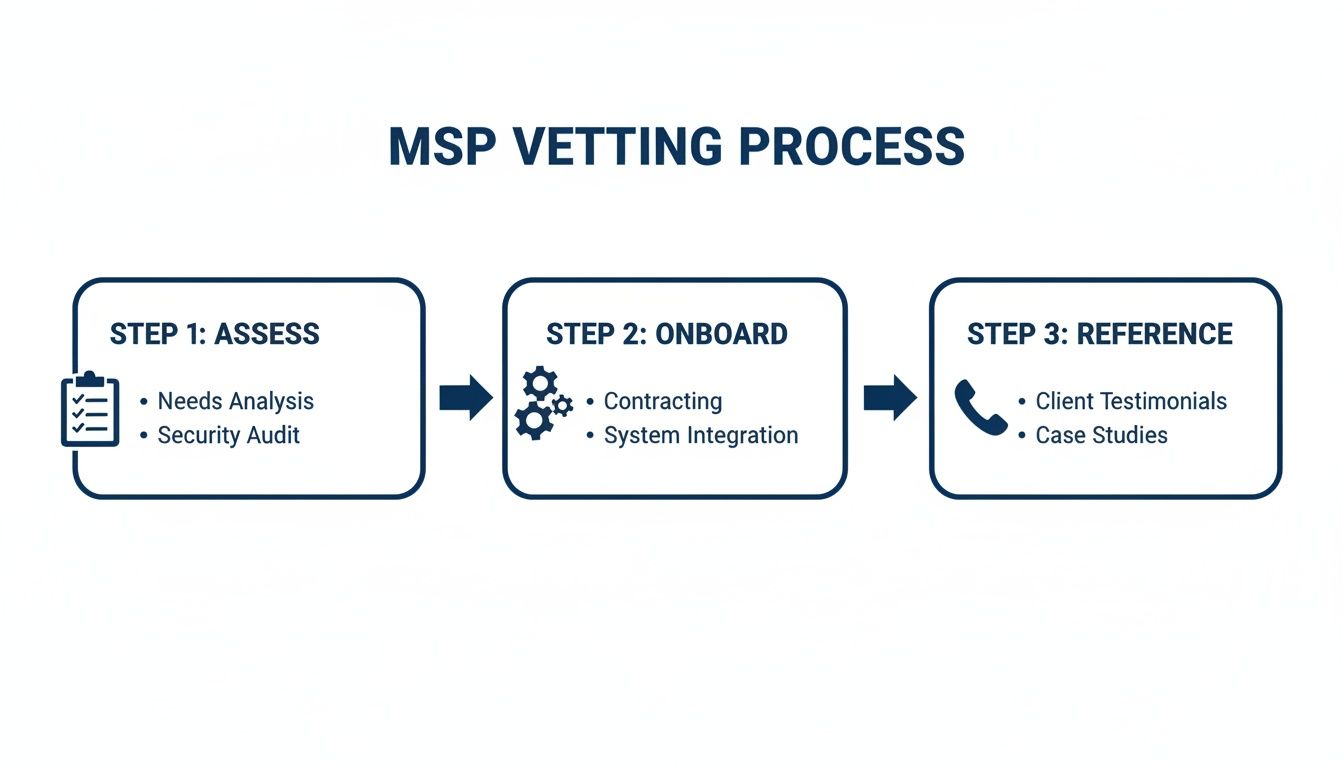
As you can see, a thorough evaluation extends beyond technical specifications. It’s about understanding how the partnership will function day-to-day.
Before you commit, take one final, careful look at the core of their service agreement. These details will define your daily interactions and long-term costs.
Pricing Model: Is it per-user or per-device? Ensure the model makes financial sense for your business, especially as you scale. A per-user model, for example, is often more predictable for companies where employees use multiple devices.
Contract Flexibility: What are the terms of the agreement? Look for the flexibility to scale services up or down as your needs change. The last thing you want is to be locked into a rigid, long-term contract that cannot adapt to your growth.
Strategic Guidance: Do they offer a Virtual CIO (vCIO) service? A good vCIO acts as a strategic advisor, helping you build a technology roadmap that supports your business goals. This ensures your IT investments are delivering real value.
A great partnership is built on transparency and a shared understanding of your goals. The right MSP for your Edmonton business will not just fix today's problems; they will be an active participant in planning for your future success.
This kind of strategic alignment is vital, especially in key local sectors. In Edmonton's healthcare industry, for example, 46% of businesses already use managed IT services. The right MSP does more than ensure compliance; they help optimize everything from patient scheduling to resource management. You can find more insights on Canada's managed services market trends on credenceresearch.com.
Ultimately, your goal is to find a partner whose expertise and culture make your technology a powerful engine for growth.
As you near a decision, several key questions often arise. Here are straightforward answers to common inquiries from Edmonton business leaders.
Pricing is typically structured in one of two ways: per user or per device. The per-user model has become standard due to its predictability.
For a reliable MSP in Edmonton, you can expect to budget between $100 to $250 per user, per month. This generally covers all support, security, and monitoring for one person, regardless of the number of devices they use. Always request a detailed quote that specifies exactly what is included to avoid unexpected costs.
The primary difference lies in whether you need a partner to supplement your IT resources or a complete replacement for them.
Fully managed IT is a complete delegation of your IT operations. It is the ideal solution if you do not have an internal IT team. The MSP handles everything, allowing your staff to focus on their core responsibilities.
Co-managed IT is a collaborative partnership. We work alongside your existing IT staff, providing specialized tools and expertise they may not have, such as advanced cybersecurity threat hunting or complex cloud management.
The right choice depends on your existing in-house resources. Co-managed IT can significantly enhance your internal team's capabilities, while fully managed services free you to concentrate on running your business.
While much IT support can be delivered remotely, a local team offers tangible advantages that a provider across the country cannot match.
When a critical server fails or hardware needs replacement, you need someone who can be on-site quickly. An MSP in Edmonton can provide that rapid response. Beyond emergencies, a local provider understands the Edmonton business community, the local economy, and Alberta-specific compliance regulations, ensuring your IT strategy is tailored for success right here at home.
Ready to partner with an MSP that understands the unique challenges and opportunities in Edmonton? CloudOrbis Inc. offers proactive, 24/7, Canada-based managed IT services designed to secure your operations and drive growth. Get a free consultation today!
September 21, 2026
Secure File Sharing Guide for Canadian BusinessesLearn secure file sharing essentials for Canadian SMBs — encryption, compliance, protocols and best practices to protect data and stay compliant.
Read Full Post
September 20, 2026
Disaster Recovery Plan Business Continuity for SMBsBuild a disaster recovery plan business continuity strategy tailored for Canadian SMBs. Covers risk assessment, RTO/RPO, backup, testing, and ownership.
Read Full Post
September 19, 2026
Database Migration Services Explained for Canadian SMBsLearn how database migration services move data to the cloud securely with minimal downtime. Types, risks, costs and a Canadian provider checklist.
Read Full Post
