A Guide to Managed Services IT Support for Your Business
Discover how managed services IT support drives growth and security for Canadian businesses. A guide to finding the right partner and strategy.

Discover how managed services IT support drives growth and security for Canadian businesses. A guide to finding the right partner and strategy.
Imagine your business's IT running like a top-tier subscription service, always available, secure, and actively working to push your company forward. That's the core idea behind managed services IT support. It’s about partnering with a dedicated team of IT experts for a predictable monthly cost, turning technology from a recurring headache into one of your greatest assets.
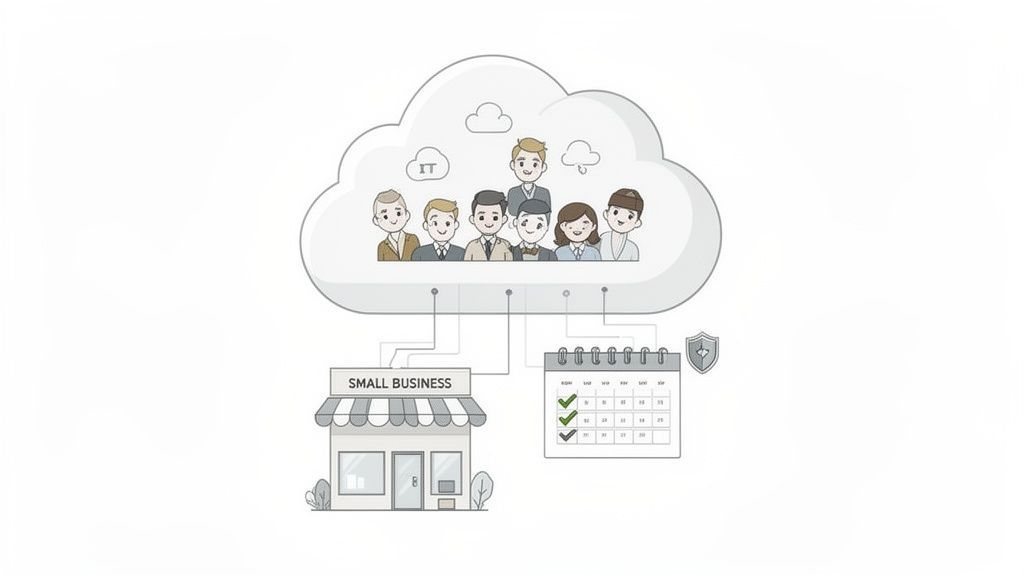
Managed services IT support represents a significant shift away from the outdated "break-fix" IT model. In the past, you would wait for a server to go down or a network to fail before calling for help. This reactive approach almost always led to expensive downtime and surprise emergency repair bills. Today's approach is entirely different.
A managed services provider (MSP) doesn't just fix problems; they become a strategic partner and proactive guardian of your entire technology stack. Instead of reacting to disasters after they happen, an MSP’s main job is to prevent them from ever occurring.
Here’s a simple way to think about it: the break-fix model is like only taking your car to a mechanic after it has broken down on the highway. Managed IT support, on the other hand, is like having a dedicated pit crew that constantly services your vehicle, checking the engine, tires, and fuel levels to ensure a breakdown never happens.
This proactive approach delivers incredible value for medium-sized organizations across Canada. It provides access to enterprise-level tools and specialized expertise that would normally be far too expensive to bring in-house. For a flat monthly fee, you get a full suite of services designed to boost your team's efficiency and secure your data. Our guide on choosing the right managed IT service provider can walk you through what to look for in a true partner.
This model is gaining significant traction. The Canadian managed services market is booming, showing a clear trend of businesses choosing to outsource their IT. The market generated USD 24.5 billion in revenue in 2023 and is on track to hit USD 52.1 billion by 2033. With Ontario making up 39% of this market, the demand for 24/7 Canada-based helpdesks and proactive monitoring is undeniable. You can explore more data on Canada's managed services market growth at grandviewresearch.com.
A true managed IT partnership is about more than just fixing computers. It’s about aligning technology with your core business objectives to fuel sustainable growth and innovation.
Ultimately, managed services IT support delivers key results that every business leader can appreciate:
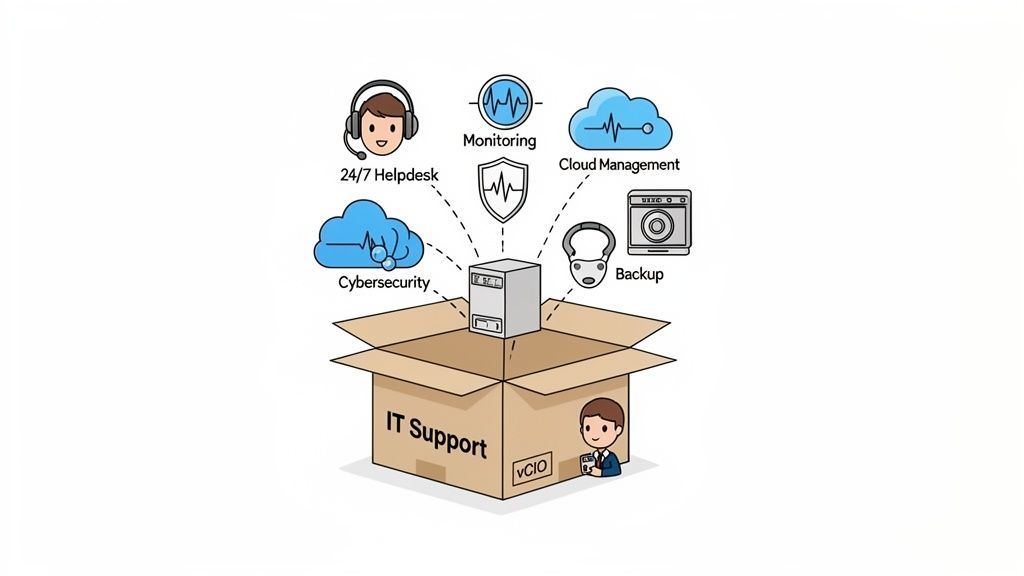
An effective managed services IT support package is more than just having a technician on speed dial. It’s a complete technology partnership designed to keep your business secure, productive, and moving forward. When you understand what’s included, you can see how these technical features translate directly into real business value.
The foundation of any great IT plan is a responsive helpdesk. But instead of dealing with an anonymous, overseas call centre, imagine having direct access to local experts who know your business. This is what a 100% Canada-based helpdesk offers, clear communication and quick resolutions from a team that understands the Canadian business landscape.
While a helpdesk is crucial for fixing problems your team encounters, the real power of modern managed services lies in preventing those problems from happening in the first place. This is where proactive network monitoring comes in. Think of it as a dedicated digital immune system for your entire business.
It works silently in the background, 24/7, keeping an eye on potential threats, performance issues, and system irregularities. Instead of waiting for a critical server to overheat and crash, proactive monitoring spots the rising temperature and alerts our team to fix it. This preventative approach stops issues before they cause costly downtime.
Beyond day-to-day fixes, a comprehensive plan brings powerful layers of security and high-level strategy to the table. These core services work together, creating a support system that protects your assets and empowers your team.
A vCIO doesn’t just manage your technology; they align it with your business goals, providing a clear roadmap for future growth and ensuring every IT investment delivers a strong return.
Finally, one of the most valuable, and often overlooked, components is the Virtual Chief Information Officer (vCIO). A vCIO gives you the strategic guidance of a senior IT executive without the six-figure salary. They work directly with your leadership to build a long-term technology plan, manage IT budgets, and ensure your infrastructure supports your business goals.
This combination of on-demand support, proactive defence, and strategic foresight makes modern managed services IT support so powerful. It’s a true partnership that offers peace of mind, knowing that every part of your technology is professionally managed. You can learn more about how CloudOrbis provides this kind of responsive, reliable help with our expert IT helpdesk support services. This allows you to stop worrying about IT and focus on what you do best: running your business.
It’s one thing to understand the services included in a managed IT plan. It's another to see how those services translate into measurable business outcomes. Moving past the "what" and focusing on the "why" is where you discover the powerful return on your investment.
These benefits aren't just technical, they have a direct impact on your budget, productivity, and your company's ability to grow.
For medium-sized organizations in Canada, switching from reactive, break-fix support to a strategic IT partnership is becoming essential. The market's explosive growth tells the story. In Canada, the managed services sector ballooned from USD 8.2 billion in 2018 to USD 17.3 billion in 2024, with projections aiming for nearly USD 45 billion by 2032. This surge is fuelled by rising cybersecurity threats and the shift to the cloud, with Canadian SMBs seeing a 15% year-over-year increase in data breaches. You can see the full analysis in the Canada's managed services market trends report from credenceresearch.com.
One of the first benefits you'll notice is the welcome shift to a predictable financial model. The old break-fix approach was a budget nightmare. Every unexpected server failure or network crash came with a surprise, and often substantial, repair bill.
With managed services IT support, you operate on a fixed monthly subscription. This all-inclusive fee covers everything from 24/7 monitoring to helpdesk support and strategic planning. You can finally budget for IT with confidence, turning a volatile operational cost into a predictable, stable investment.
It's nearly impossible for a small in-house IT team to be experts in everything. A modern business needs specialized knowledge across cybersecurity, cloud infrastructure, network architecture, and industry-specific compliance. Building an internal team with that depth of expertise is incredibly expensive and, for most medium-sized businesses, impractical.
A managed IT partner gives you immediate access to an entire team of certified specialists for a fraction of the cost. Whether you need a cybersecurity analyst to investigate a threat, a cloud architect to optimize your Azure environment, or a vCIO to build your technology roadmap, their expertise is on-demand and included in your plan.
By offloading day-to-day IT management, your team can stop putting out fires and refocus their energy on high-value initiatives that directly contribute to revenue and growth.
Cyber threats are growing more sophisticated, and regulatory standards are becoming stricter. For any business in a regulated field like healthcare, finance, or law, maintaining a solid security and compliance posture isn't just a good idea, it's non-negotiable.
Managed services providers bring enterprise-grade security tools and processes that are often out of reach for medium-sized businesses. This includes advanced threat detection, continuous vulnerability scanning, and proactive patch management. They also help ensure your systems meet compliance standards like PIPEDA, freeing you from a major administrative and legal headache. As you look closer, you'll find many key benefits of managed IT services that go far beyond basic tech support.
Ultimately, the goal is to unlock your organization’s potential. By minimizing downtime, you directly increase team productivity. When your systems are reliable and your staff isn’t slowed down by technical glitches, they can focus on their core responsibilities. This shift allows your entire organization to concentrate on what it does best: serving customers and growing the business.
Choosing a provider for your managed IT support is one of the most critical decisions your business will make. This isn't just about hiring a vendor to fix tech problems; it's about bringing on a strategic partner who will protect your data, empower your team, and help you grow.
Getting this choice wrong can lock you into a partnership that creates more headaches than it solves. This guide will arm you with the right questions to ask, key credentials to look for, and red flags to avoid. A little due diligence now means finding a partner who minimizes disruption and delivers measurable value for years to come.
When you start speaking with potential partners, it’s easy to get lost in technical jargon and sales pitches. To cut through the noise, focus on a few non-negotiable items that separate true strategic partners from run-of-the-mill vendors.
A great MSP doesn't just promise good service; they prove it with data. Key performance indicators like ticket closure rates, first-contact resolution, and Client Satisfaction (CSAT) scores are hallmarks of a mature and accountable provider.
A great managed IT support partner is proactive, not reactive. Their goal is to spot and solve problems before they can disrupt your business. You need to dig into exactly how they achieve this.
When evaluating potential partners, understanding key Managed Service Provider best practices can help you identify a truly capable and reliable provider. Ask them to walk you through the tools they use for proactive monitoring. How do their systems detect a failing hard drive, a new security vulnerability, or a network bottleneck? A good partner will explain their process clearly.
Another critical area to scrutinize is their onboarding process. A chaotic, poorly planned transition can cause massive disruption. Ask for a detailed roadmap:
A professional provider will have a structured, proven process designed to make the transition feel smooth and painless. For more information, our guide on selecting from the top managed services companies offers even more insight. By asking these tough questions upfront, you empower yourself to choose a partner who will become a genuine asset to your business.
The idea of switching IT providers can feel daunting. Many business leaders worry about chaos, downtime, and the headaches that can come with a changeover.
But a professional handover to managed services IT support isn't chaotic. When done right, it's a structured, methodical process that prioritizes your business continuity. A true partner doesn’t just show up and start unplugging things; they follow a clear, phased approach to integrate with your business without causing a ripple.
The journey begins with a deep dive into your current technology setup. A skilled provider won't make a single recommendation until they fully understand what you have, how you work, and where your biggest frustrations lie. Think of this Discovery and Assessment phase like a general contractor inspecting a building’s foundation and wiring before starting a renovation.
During this stage, your new IT partner will:
This initial groundwork is what separates a good partner from a great one. It creates the detailed blueprint needed to build a technology plan that fits your organization perfectly and prevents surprises down the road.
Once your partner has a complete picture of your IT environment, the next step is building a Strategic Roadmap. This isn't just a list of services; it's a long-term plan that directly connects technology to your business objectives. It answers the question, "How can technology help us get where we want to be in one, three, and five years?"
This roadmap prioritizes every action, separating urgent fixes from future improvements. For instance, it might lay out an immediate plan to secure your network while scheduling a future cloud migration in Alberta to help your business scale.
This diagram shows how these critical first steps fit together.
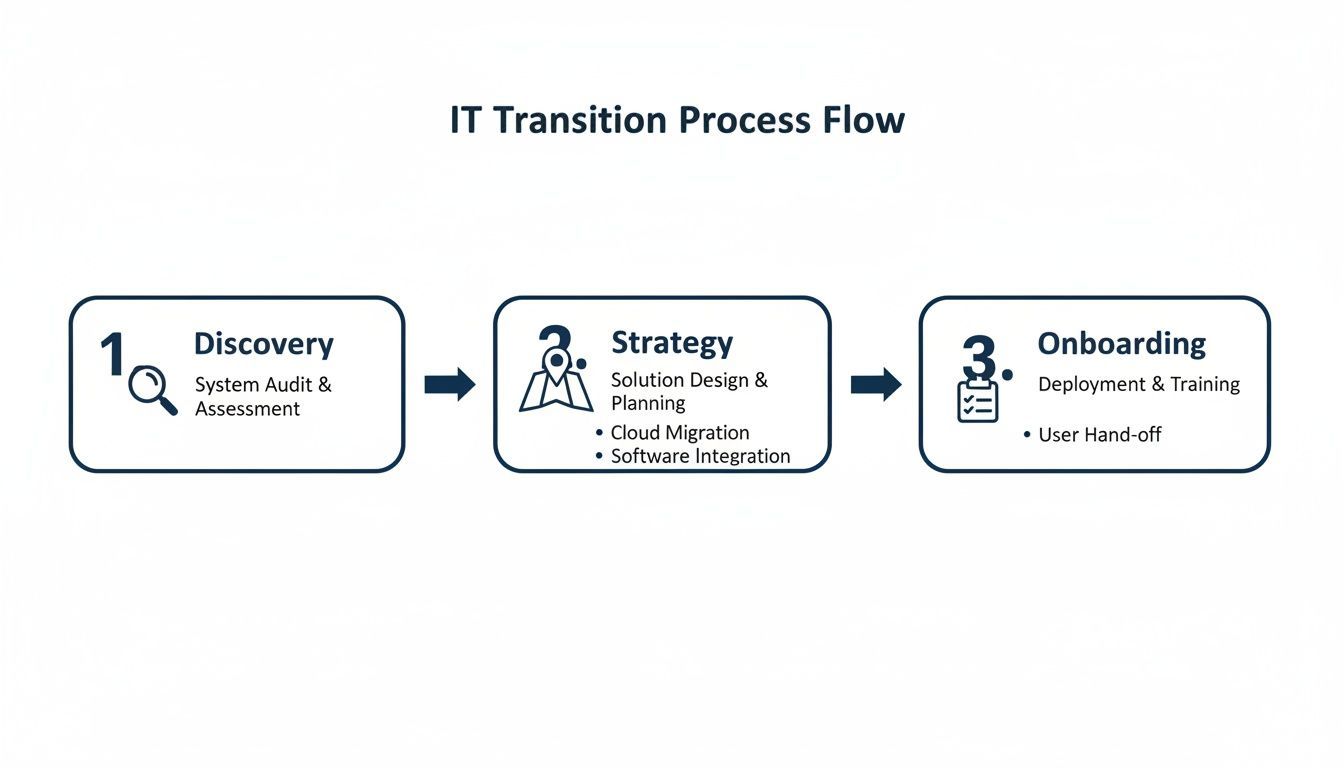
As you can see, a proper transition moves logically from understanding your current state (Discovery) to planning for the future (Strategy) before any technical changes are made.
With a clear plan approved, the Onboarding phase begins. This is where your new provider methodically deploys their monitoring tools, security agents, and support protocols. A professional team handles this quietly in the background with little to no disruption to your team’s daily work.
The goal of a professional onboarding isn't just to install software. It’s to prepare your entire environment for a seamless handover, ensuring every employee knows who to call for help and every system is monitored from day one.
The preparation for "Go-Live Day", the official switchover, is meticulous. Your provider ensures all credentials are in place, backups are running and verified, and their helpdesk team is fully briefed on your specific environment.
When the day arrives, the transition is often so smooth that your employees barely notice anything has changed. The only difference they’ll see is that their IT issues are suddenly resolved much faster. This careful, behind-the-scenes planning is the hallmark of truly effective managed services IT support.
Considering a switch to a proactive IT model? It’s a big decision, and it’s natural to have questions. Getting clear answers is the first step toward making a smart, confident choice for your business.
Let’s tackle some of the most common queries we hear about managed services IT support. The biggest point of confusion is often the real difference between this approach and traditional IT support. The distinction is all about mindset: traditional support is reactive. You call for help only after something breaks.
Managed services, on the other hand, is completely proactive. Your provider is constantly monitoring your systems to fix problems before they can disrupt your business. It’s about turning IT from a source of emergencies into a reliable, predictable asset.
One of the biggest reliefs for business leaders is getting away from unpredictable IT expenses. With the old break-fix model, you’re hit with a surprise bill every time a server crashes or a network goes down, making it impossible to budget effectively.
Managed IT services operate on a predictable, subscription-based model. You pay a flat monthly fee for a comprehensive suite of services, transforming a volatile operational cost into a stable, manageable investment.
This structure means you can forecast your IT spending with accuracy. Everything from 24/7 helpdesk access to advanced cybersecurity and strategic planning is rolled into one fee, which eliminates the financial anxiety that comes with unexpected tech failures.
This is a valid concern, but the answer is a clear no. A true managed services partnership isn’t about surrendering control; it’s about gaining a powerful strategic ally. You’re still in the driver’s seat, setting the overall direction and business goals.
Think of your managed services provider (MSP) as your expert implementation team. They handle the complex, day-to-day technical work and provide the high-level guidance you need to make smart decisions, but the ultimate authority always rests with you. It’s a collaborative relationship designed to empower your leadership, not replace it.
Many leaders of medium-sized businesses wonder if they’re big enough to see the benefits. In reality, this model is perfectly suited for growing businesses. Managed services are built to be scalable, meaning the support you receive grows right alongside your company.
Instead of being an expense only large enterprises can afford, this model gives medium-sized organizations access to the same level of expertise and advanced tools that bigger corporations use, all at a cost-effective price point. It levels the playing field, allowing you to compete more effectively with a powerful, secure, and reliable technology foundation.
Ready to stop worrying about IT and start focusing on growth? The team at CloudOrbis provides the proactive, Canada-based managed services IT support your business needs to thrive. Learn more about how we can empower your organization.
Book a 30-minute call with a senior engineer. No sales script, just straight answers about your environment.


