A Guide to IT Managed Services Edmonton for Growing Businesses
Discover how it managed services edmonton can secure and scale your business. Get expert advice on choosing the right IT partner and avoiding common pitfalls.

Discover how it managed services edmonton can secure and scale your business. Get expert advice on choosing the right IT partner and avoiding common pitfalls.
Managing your own IT can feel like you’re constantly putting out fires. For many Edmonton businesses, it's a never-ending cycle of unexpected downtime, glaring security vulnerabilities, and ballooning operational costs. Handing the reins over to a professional IT managed services provider in Edmonton gets you out of the reactive tech loop and lets you focus on what you're actually in business to do: grow.
Let’s be realistic, trying to run a business while also being the on-call IT expert is a recipe for burnout. We see it all the time with local companies in manufacturing, healthcare, and other demanding sectors. The daily pressures are intense, from the ever-present threat of a cyberattack to the sheer cost of finding and keeping skilled IT staff on payroll.
This challenging reality is causing a major shift in how local businesses approach their technology. Recent industry analysis shows that 46% of businesses in Edmonton now rely on managed IT services. That's a significant increase from just 28% five years ago, signalling a clear move away from break-fix, in-house solutions toward proactive, professional support that keeps operations running smoothly.

I've heard countless stories from business owners who were completely bogged down by technology problems. Picture a busy manufacturing plant where a server fails mid-production. The entire line grinds to a halt for hours, costing thousands in lost revenue. Or think of a healthcare clinic where the small IT team is so swamped with password resets and printer issues that they can’t possibly keep up with compliance standards.
These aren't just hypotheticals; they're the real-world scenarios that undermine productivity every single day.
Choosing managed IT is a deliberate decision to swap that chaos for stability. You’re moving from a model where you’re always reacting to problems to one where a dedicated partner prevents them from happening in the first place. This frees up your team to focus on innovation and customer service, not troubleshooting a sluggish network.
By partnering with a managed services provider, you gain more than just technical support; you gain a strategic ally dedicated to your business’s stability, security, and growth.
There’s a massive advantage to having a Canada-based partner who genuinely understands the Edmonton business scene. A local provider understands the specific challenges and opportunities here, from navigating data residency laws to knowing the unique demands of key industries like oil and gas or construction.
A truly proactive approach means more than just being on call. It involves:
Ultimately, the goal is to turn your IT from a frustrating cost centre into a powerful tool that helps you grow. If you're ready to see how a tailored strategy can work for your business, explore the benefits of our comprehensive IT services in Edmonton. It’s a strategic move that delivers the peace of mind that comes from knowing your technology is in expert hands.
Trying to make sense of the technical terminology in different IT managed services in Edmonton can be a real headache. On the surface, many plans look the same, but the true value is always buried in the details, and in the proactive mindset behind the services. A modern plan isn't just a list of features; it's a complete strategy built to keep your business secure, productive, and ready to scale.
Let's cut through the noise and break down what a top-tier managed IT service plan actually delivers. It’s about shifting from just fixing problems as they arise to preventing them from happening in the first place, ensuring your technology is an asset, not a liability.
The foundation of any solid managed IT plan is proactive monitoring. This isn't about waiting for a panicked call when something breaks. It's about having a team of experts keeping a close eye on your network 24/7/365. They use sophisticated tools to spot anomalies, like unusual network traffic or a server approaching its capacity, long before they can disrupt your operations.
This constant vigilance means potential issues are often fixed before your team even knows there was a problem. For example, a local Edmonton logistics company we work with narrowly avoided a major shipping delay when our system flagged a failing server component. We replaced it overnight, preventing any downtime that would have crippled their morning dispatch.
When an employee can’t open a critical file or a key application crashes, you need help that's fast and effective. A modern plan gives you unlimited access to a responsive helpdesk staffed by skilled technicians. For any Edmonton business, having that support right here in Canada is a significant advantage, no frustrating communication barriers or dealing with massive time zone differences.
An effective helpdesk doesn’t just close tickets; it gets to the root cause of the problem. This approach reduces recurring issues and helps your team get back to work without friction.
Whether it’s a quick password reset or a tricky software bug, the goal is always a swift, permanent solution. To get a better idea of how this direct support model helps businesses like yours, you can learn more about our dedicated IT helpdesk support services and how they keep teams productive.
Cybersecurity isn't an add-on anymore; it's a core business function. A comprehensive managed IT plan delivers a multi-layered security strategy to shield your business from the constantly shifting threats of ransomware, phishing, and data breaches.
This goes way beyond basic antivirus software. A proper security stack includes:
Imagine a local accounting firm getting hit with a sophisticated ransomware attack. Our proactive threat detection systems caught and isolated the malicious software before it could encrypt a single file. That quick action saved the firm from a potential catastrophe and protected their clients' sensitive financial data.
What would happen if your most important business data disappeared tomorrow because of a server failure, cyberattack, or even a fire? A modern managed IT service plan ensures you never have to find out the hard way. It includes automated, secure, and regularly tested data backups.
Beyond just preventing problems, a truly modern service focuses on business continuity. That means offering solid backup solutions and expert professional computer data recovery if the unexpected still happens. When disaster strikes, you can restore your systems and data quickly, minimizing downtime and the financial impact.
This became a harsh reality for an Edmonton construction company when a critical server failed. Because they had a solid disaster recovery plan, we restored their project files and financial records from a recent backup in just a few hours, not days. They were back in business with minimal disruption.
To help you see the difference in service levels at a glance, we've put together a simple breakdown.
This table breaks down the typical service inclusions for standard and premium managed IT plans to help Edmonton businesses identify which level of support best fits their operational needs and risk profile.
| Service Area | Core (Basic) Plan Inclusion | Comprehensive (CloudOrbis) Plan Inclusion |
|---|---|---|
| Support | Standard business hours helpdesk (9-5) | 24/7/365 Canada-based unlimited helpdesk support |
| Monitoring | Basic alerts for major system failures | Proactive, 24/7 monitoring with automated issue resolution |
| Cybersecurity | Basic antivirus and firewall management | Multi-layered security, EDR, and employee training |
| Backups | Nightly backups to a local device | Automated, encrypted cloud backups with disaster recovery testing |
| Strategy | Reactive, break-fix problem solving | Regular strategic reviews and technology roadmap planning (vCIO) |
As you can see, a comprehensive plan moves far beyond just keeping the lights on. It’s about creating a resilient, secure, and strategic technology foundation that actively supports your business goals.
Picking an IT partner is one of the most important decisions you'll make for your business. This isn't just about hiring someone to fix a computer when it breaks; you're entrusting a core part of your operations to a team that can either fuel your growth or become a major roadblock.
Get it right, and you’ll achieve better stability, stronger security, and a real strategic advantage. Get it wrong, and you're in for recurring downtime, surprise costs, and endless frustration. To avoid that, you need a clear, structured way to evaluate your options. Let's walk through the essential steps, from defining what you actually need to asking the tough questions that separate true partners from simple vendors.
Before you even glance at a provider’s website, you need to look inward. A common mistake is jumping straight into comparing service lists without first mapping out the problems you're trying to solve. A generic IT plan won't fix your specific operational challenges or support your long-term goals.
It's time for a business strategy session, not just a technical one. Get your team together and document your current state and future ambitions.
Once you have this clarity, you'll be measuring potential providers against a concrete set of requirements, not just a vague promise of "good service."
This decision tree gives you a simplified starting point, guiding you toward the right kind of plan based on what your business truly needs.
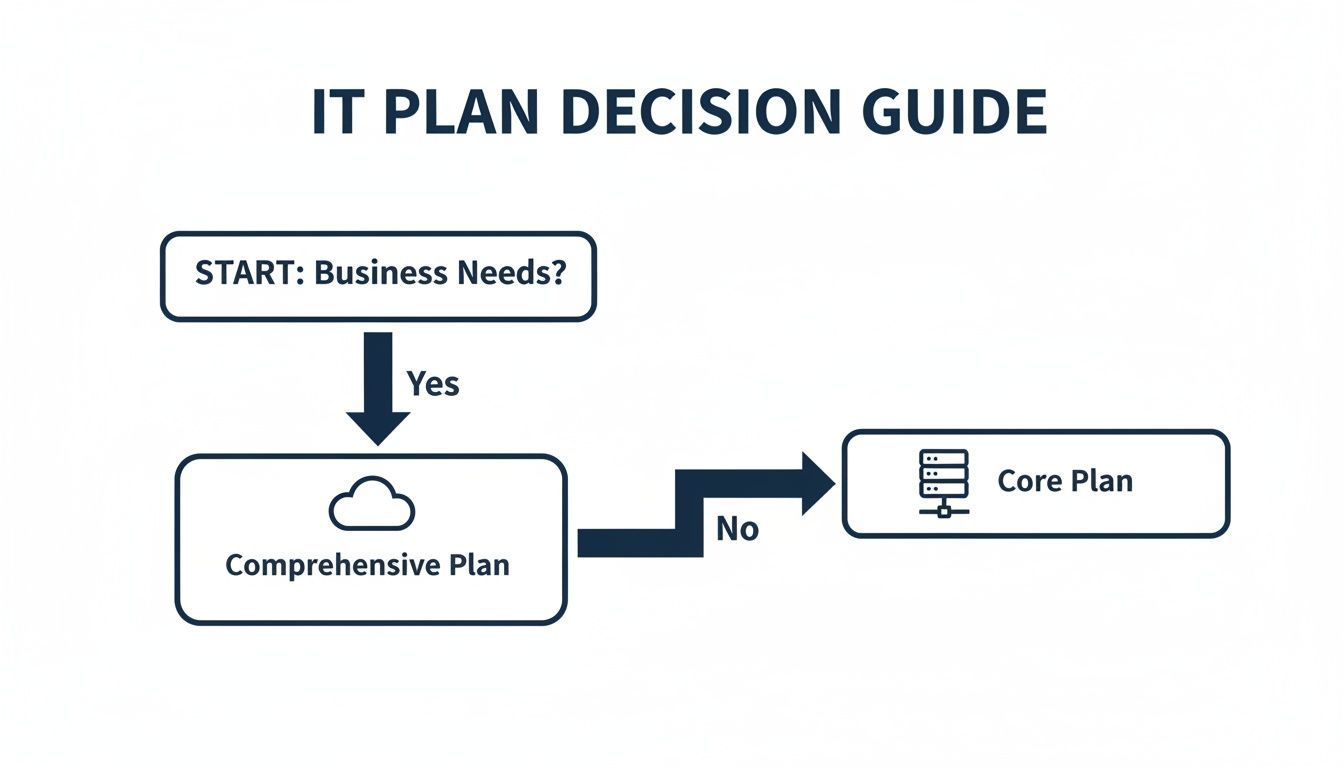
As the visual shows, a deep understanding of your business needs is the critical first step. It's what helps you decide between a basic core plan and a more strategic, all-inclusive partnership.
Let's be clear: not all IT providers are created equal. A team that's great at supporting a small retail shop probably doesn't have the expertise to manage the complex IT of a manufacturing plant or a law firm with multiple offices. You have to investigate their technical qualifications and their track record in your industry.
Look for real-world proof of their expertise. Certifications from major technology partners like Microsoft or Fortinet are a good start, but they're just the beginning. The real test is their experience. Ask for case studies or, even better, references from businesses that are similar to yours in size and sector.
A provider with experience in your industry already understands your specific challenges, from the software you use daily to the regulatory hurdles you face. This specialized knowledge reduces the learning curve and results in solutions that actually work for you.
For example, a provider who knows the construction industry will understand the importance of robust connectivity between the main office and remote job sites. Likewise, an expert in healthcare IT will be deeply familiar with securing patient data and keeping critical clinical applications online. For a deeper dive into this kind of strategic fit, our guide on IT consulting in Edmonton offers valuable insights.
The Service Level Agreement (SLA) is where promises are put down in writing. If an SLA is vague or weak, that’s a massive red flag. This document should be your source of truth, clearly defining what the provider commits to and setting measurable expectations.
Don't just skim it. A provider who is hesitant to commit to specifics is usually telling you they can't guarantee their performance.
Look for these key metrics:
An SLA without these concrete, measurable commitments is just a marketing brochure. Insist on clarity and accountability. A transparent provider will welcome this level of detail because they have the processes in place to back up their claims. This diligence up front is your best defence against empty promises down the road.
The sales pitch is over. Now it’s time to get down to business. Choosing a partner for your IT managed services in Edmonton is a major commitment, and asking the right questions is the only way to separate a true strategic ally from just another vendor.
To help you cut through the noise, we've grouped these critical questions by theme. We won’t just give you the questions; we'll explain what a great answer actually sounds like. This will help you spot the partners who are genuinely invested in your success, not just focused on signing another contract.
When your operations are on the line, the quality and speed of IT support are everything. These questions move beyond vague promises of "great service" to uncover what you can really expect when you need help the most.
A great partner won’t just promise fast support; they will prove it with hard data and concrete SLAs. Vague commitments are a significant red flag that often leads to frustration down the road.
In a world of constant cyber threats, your IT partner is your first line of defence. Their security approach needs to be proactive, comprehensive, and relentlessly up-to-date.
Your business is going to evolve, and your IT support needs to be ready to grow with you. A purely reactive, break-fix approach will only hold you back. You need a partner who thinks about your future, not just your current ticket queue.
Asking these tough questions will give you the clarity needed to choose the right partner. For more guidance on what to look for, our article on what separates the best managed IT service companies can provide additional valuable insights.
Choosing a provider for IT managed services in Edmonton is a significant step, but the real work begins after you’ve signed the contract. The transition and onboarding process is where promises meet reality. A seamless, well-structured onboarding experience is the foundation for a great long-term partnership, while a chaotic one is an immediate sign of trouble on the horizon.
Knowing what a smooth transition should feel like, and which red flags to watch for, is your best defence against buyer's remorse. A true partner will walk you through a transparent process designed to minimize disruption and start delivering value from day one.
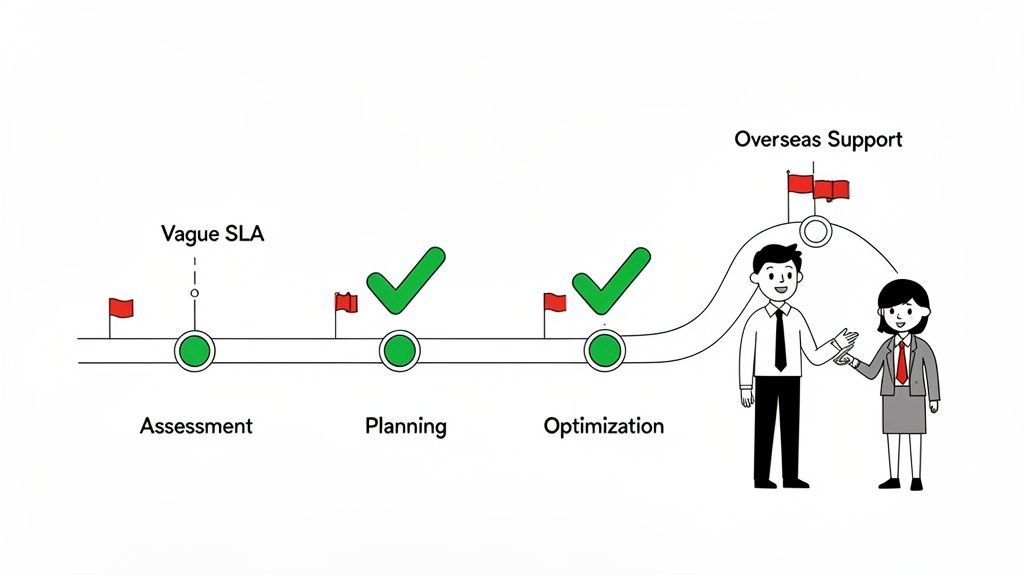
A professional onboarding process is so much more than just installing new software. It’s a methodical project designed to ensure your new IT partner gets to know your business inside and out before they make any major changes.
You should expect a clearly documented and communicated plan, giving you total visibility at every turn. This strategic approach ensures nothing gets missed and your team feels supported, not disrupted.
A high-quality onboarding plan almost always includes these phases:
This kind of structured approach is what prevents the common headaches of a rushed or poorly planned switch.
A provider's onboarding process is a direct reflection of their overall organizational maturity. A detailed, transparent, and communicative plan signals a proactive partner, while a disorganized, reactive approach is a major warning sign of future frustrations.
While a smooth onboarding builds confidence, certain warning signs suggest a provider may not be able to deliver on their promises. Spotting these red flags early can save you from a costly and frustrating partnership down the road.
Be cautious of any provider that exhibits these behaviours:
Vague or Non-Existent SLAs
A Service Level Agreement (SLA) needs to have concrete, measurable commitments, like guaranteed response times or 99.9% system uptime. If the SLA is full of vague language like "best effort" or is missing specific numbers, it’s a sign the provider isn't willing to be held accountable for their performance.
A Reactive 'Break-Fix' Mentality
Is the provider only focused on fixing problems as they arise? A genuine managed services partner should be proactive. They should be talking to you about strategic improvements, strengthening your security, and long-term planning. If their main goal is just closing support tickets, they’re stuck in an outdated break-fix mindset.
Hidden Fees and Scope Creep
Your contract should clearly spell out what’s included in your monthly fee. If a provider starts billing you extra for things you assumed were covered, like on-site visits, setting up a new user, or small projects, that's a problem. Pricing transparency is non-negotiable.
Poor Communication
Are you being left in the dark about how the onboarding is progressing? A lack of regular updates, unanswered emails, and a general feeling of disorganization are huge red flags. This problem will only get worse when you have a critical IT issue. For more tips, our guide explains how to get more out of your IT provider and build a stronger partnership.
Making the switch to managed services is a big decision, and it’s natural to have questions. To help you get some clarity, we’ve put together straightforward answers to the most common queries we hear from business leaders across Edmonton. No technical jargon, just the information you need.
There’s no one-size-fits-all price tag for IT managed services in Edmonton. The cost depends on factors like the number of people on your team, the complexity of your technology, and the exact services you need. Most providers use a per-user, per-month model, which can range anywhere from $100 to $250 per user.
It’s always tempting to choose the cheapest quote, but that can be a trap. Low-cost plans often lead to surprise bills for services you thought were included, like on-site visits or project work. A transparent, all-inclusive model gives you a predictable budget and, more importantly, a better return on your investment through improved security, productivity, and uptime.
Not at all. In fact, we often see small and medium-sized businesses gain the most value. Partnering with a managed services provider gives you access to enterprise-level security tools, deep strategic expertise, and a whole team of technical talent, all without the massive overhead of hiring an in-house IT department.
A good provider will offer solutions that can scale right alongside your business. Whether you have a team of 10 or 100, the right plan ensures you have robust support at every stage of your company's growth.
These two models offer different levels of support based on the resources you already have in-house.
Co-managed IT is a perfect fit for businesses that have an IT manager who needs to offload daily maintenance and tap into specialized skills. It creates a more powerful and efficient IT function overall.
While most IT issues can be resolved remotely, having a local presence is invaluable when you truly need it. When a critical piece of hardware fails or you need hands-on help setting up a new office, you want a team that can get to your location quickly. A local provider guarantees that rapid response for emergencies.
Beyond just speed, a provider based right here in the Edmonton area has a much deeper understanding of the local business climate, industry-specific regulations, and even regional connectivity challenges. That local knowledge leads to more relevant and effective IT strategies for your business.
Ready to build a technology foundation that actually drives your business forward? The team at CloudOrbis Inc. is here to provide the proactive, strategic IT support your Edmonton business deserves. Let's start a conversation about your goals.
Book a 30-minute call with a senior engineer. No sales script, just straight answers about your environment.


