
September 17, 2026
Cloud Migration Roadmap Template That Prevents Costly ReworkGet a practical cloud migration roadmap template plus steps to customize it for assessment, waves, testing and cutover without budget surprises.
Read Full Post%20(1).webp)
Usman Malik
Chief Executive Officer
December 19, 2025
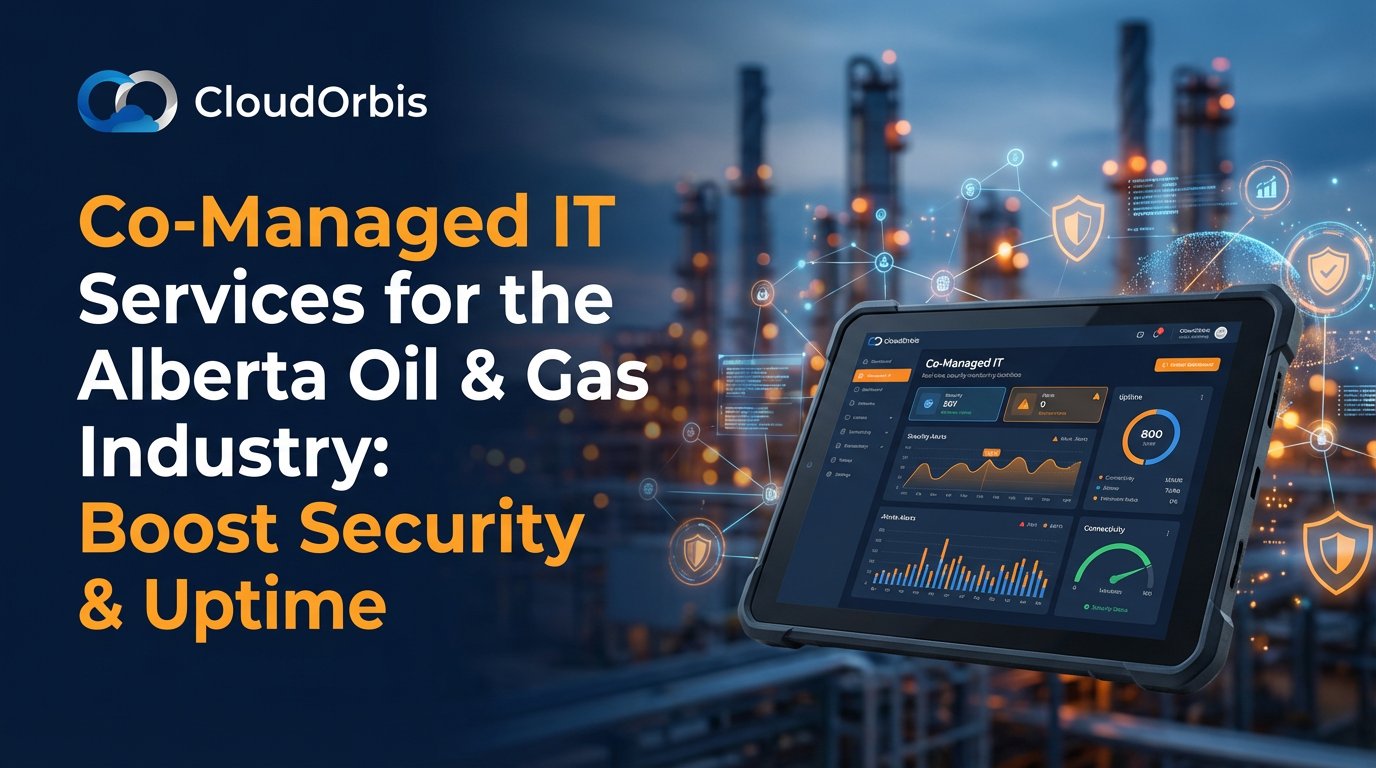
Co-managed IT for Alberta’s oil and gas industry is a strategic partnership model. It’s about bringing in an external IT provider to augment your internal team, not replace it. This approach blends your in-house institutional knowledge with specialized, scalable expertise to boost security, efficiency, and operational uptime in one of the world's most demanding sectors.

Operating in Alberta’s oil and gas sector means navigating a complex world of market volatility and constant pressure to adopt new technologies. This reality puts a huge strain on internal IT teams, who are expected to secure critical infrastructure one minute and drive game-changing innovation the next.
In this climate, the old break-fix or fully outsourced IT models often fall short. Companies need a more flexible, collaborative way to manage their technology effectively.
This is exactly where co-managed IT services come in. Think of it as adding a seasoned co-pilot to your flight crew. Your internal team remains the captain, guiding the overall strategy and daily operations. The co-managed partner is there to provide specialized expertise, advanced tools, and an extra set of eyes on the controls.
This collaborative model gives energy companies a direct path to strengthening security, improving operational efficiency, and gaining a real competitive advantage in a tough market.
The core idea is simple: you blend the irreplaceable, on-the-ground knowledge of your internal staff with the advanced capabilities of a dedicated IT partner. The result is a stronger, more resilient technology foundation for your entire operation.
The shift toward co-management is a response to the real challenges facing the energy sector. As operations become more digitized and interconnected, the demands on IT departments are exploding. Companies are grappling with:
By partnering with a co-managed IT provider, companies can tackle these challenges head-on without the massive overhead of building a huge, specialized in-house team. To get a better sense of this evolution, it's worth looking at the current communications technology trends in the oil & gas sector. This guide will break down exactly how this partnership works, and you can learn more about specialized IT services for the oil and gas industry in our detailed overview.
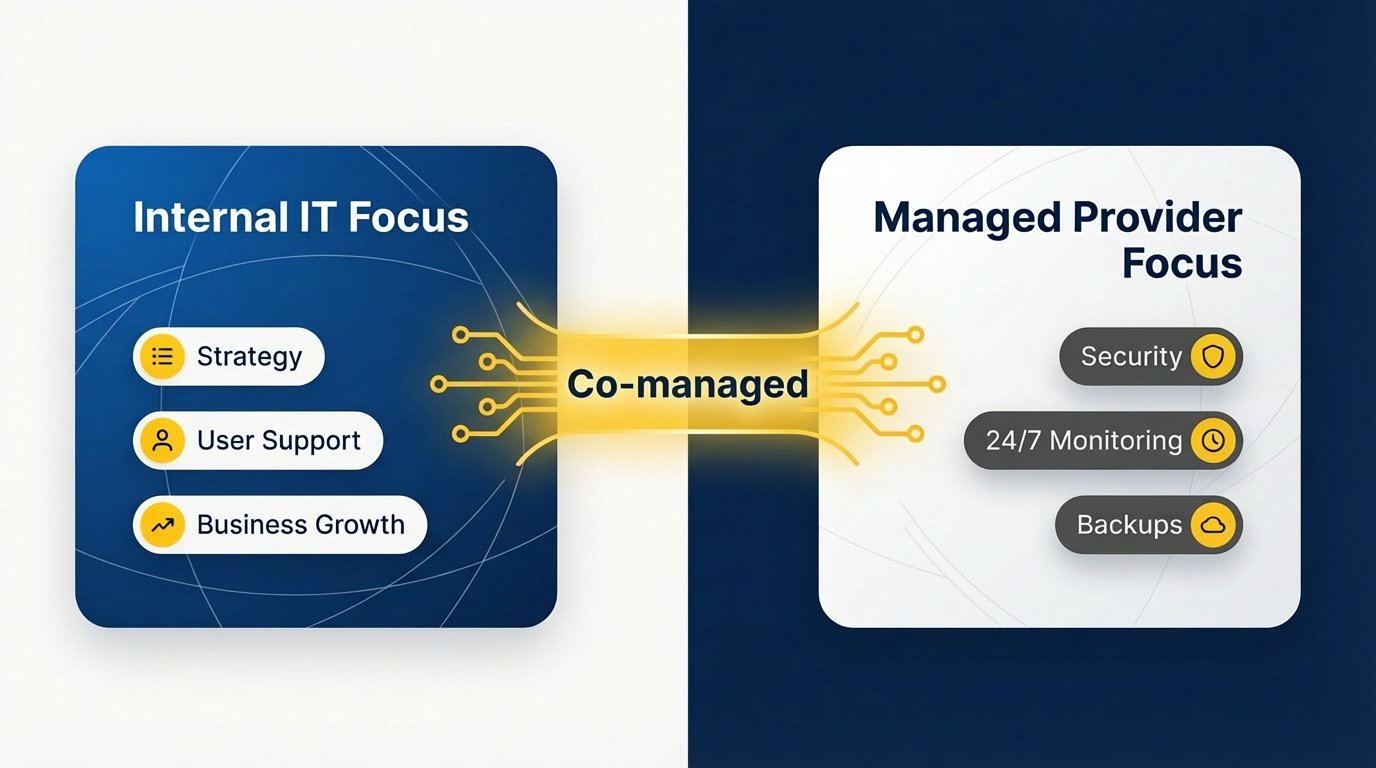
Let's clear the air on a common myth. Bringing on a partner for co-managed IT services for the Alberta oil & gas industry does not mean showing your internal team the door. It’s not about outsourcing your IT department or giving up control.
Think of it as a strategic alliance—a way to get the best of both worlds. Your in-house experts hold priceless institutional knowledge. They know your people, your workflows, and your operational history better than anyone. A co-managed partner complements that by bringing specialized skills, 24/7 monitoring capabilities, and enterprise-grade tools that might be difficult to justify in-house.
This kind of collaboration is becoming essential. As the industry evolves, the co-managed model is gaining traction as a way to adapt to a changing field services landscape. While the number of service businesses has dipped nationally, Alberta remains the heart of the industry, making operational efficiency more critical than ever. You can read more about the industry's economic landscape on IBISWorld.
To really illustrate this, picture an airplane cockpit. Your internal IT team is the captain. They are in command, steering the aircraft, managing the day-to-day, and making the big strategic calls that align with your company’s goals.
Your co-managed IT provider is the expert co-pilot. They are in the next seat, providing advanced navigation, real-time threat intelligence, and systems support to keep the flight smooth and safe. They handle the complex, time-consuming tasks humming in the background, freeing up your captain to focus on the destination.
This model is about augmentation, not replacement. Your team's strengths get a serious boost, their weaknesses are covered, and your entire IT operation becomes more resilient and capable.
This partnership structure guarantees your IT strategy stays aligned with your business objectives, all while getting the backup needed to execute it perfectly. It's a powerful way to fill skills gaps without the headache and expense of hiring more full-time staff. For a closer look at the basics, check out our guide to understanding managed IT services.
So, how does this work day-to-day? While every partnership is tailored to specific needs, there's a common pattern to how tasks are divided. The goal is to let each team play to their strengths. Your internal people focus on high-touch, strategic work, while the co-managed partner handles the heavy lifting on the back end.
The table below breaks down a typical division of labour, illustrating how your team and a partner can work in sync.
IT FunctionYour Internal IT Team's Role (The Captain)Your Co-Managed Partner's Role (The Co-Pilot)User & Helpdesk SupportHandles Tier 1 support for daily employee issues. They have direct user relationships.Manages escalated, complex tickets, provides after-hours coverage, and supports back-end systems.CybersecurityEnforces security policies, trains staff, and manages user access.Implements and manages advanced threat detection, 24/7 monitoring, vulnerability scanning, and incident response.Network & Server ManagementPerforms physical checks, manages local devices, and plans capacity.Handles routine patching, performance optimization, and proactive maintenance to ensure uptime.Strategic Planning & ProjectsLeads technology strategy, sets business goals, and manages projects from a business perspective.Provides a virtual CIO (vCIO) for roadmap development, budget forecasting, and expert technical guidance.
This shared responsibility ensures nothing slips through the cracks. It empowers your internal staff to stop putting out fires and start focusing on high-value projects that drive the business forward.

When you look at a co-managed IT model, you're not just seeing generic perks. You're seeing specific, high-impact benefits built for the unique pressures of Alberta's energy sector. These advantages go right to the heart of industry challenges that affect safety, productivity, and your bottom line, strengthening your operations from the field to the head office.
A significant immediate win is reinforcing both Information Technology (IT) and Operational Technology (OT) security. In the energy world, these two domains are colliding more than ever, creating new vulnerabilities that bad actors are keen to exploit. For any single team, protecting this converged environment is a monumental task.
Picture a mid-sized drilling company in rural Alberta. Their small IT team is buried under a constant avalanche of daily user support, password resets, and software updates. What gets neglected? Critical systems like remote SCADA controls or pipeline monitoring sensors are often left dangerously exposed.
This is where a co-managed partner changes the game. They step in to fill those crucial gaps, implementing 24/7/365 monitoring for remote sites, proactively managing security patching for OT systems, and ensuring you stay compliant with standards from the Alberta Energy Regulator (AER).
By sharing the security load, your internal team is pulled out of constant firefighting mode. They can finally focus on strategic projects that actually drive the business forward, knowing a partner has your critical infrastructure locked down.
This collaborative defence pays off in very real ways: reduced operational downtime, stronger safety protocols, and better efficiency all around. It turns security from a necessary expense into a genuine business enabler. To truly defend your assets, it's vital to understand the full scope of available cyber security services and how they protect your business.
The benefits of co-managed IT services for the Alberta oil & gas industry are not just theoretical—they show up on the balance sheet. This model is quickly becoming a cornerstone of the industry's digital shift, helping companies achieve more with less, even in tough environments.
Just look at Liberty Energy, which has operations in both Calgary and Red Deer. They used co-managed platforms and telematics to tighten up everything from payroll to third-party monitoring. The result? They slashed back-office hours by over 1,600 annually and saved US$60,000 each year. Those are powerful numbers. You can discover more about technology's role in the sector's future via ATB.
Energy companies consistently report these key outcomes:
Ultimately, this partnership gives you the technical horsepower and strategic oversight needed to thrive. It lets you build a more secure, efficient, and adaptable operation that’s ready to meet whatever the market throws at you.
Making the shift to a co-managed IT model isn't an overnight switch—it’s a strategic move. For leaders in Alberta's energy sector, a deliberate, well-planned approach is the only way to ensure a smooth integration that delivers real value from day one. This roadmap breaks the process down into clear, manageable steps, guiding you from your first assessment to a thriving, long-term partnership.
The journey starts with an honest internal review. Before you can find the right partner, you need a crystal-clear picture of your own operational landscape, including your team's strengths and where you need backup.
The very first step is a thorough internal IT assessment. This isn't just about making a list of your hardware. It’s a deep dive into your team's skills, their daily workload, and the technology stack you're currently running. The goal is to paint a clear picture of what your team excels at and where the gaps are.
Start asking the tough questions:
This frank evaluation becomes the foundation of your entire search. It helps you define exactly what you need from co-managed IT services for the Alberta oil & gas industry, so you don’t end up paying for support you already have.
Once you know exactly what you need, the next step is to define what success looks like. Vague goals like "improve IT" are not useful. You need specific, measurable objectives that tie directly back to business outcomes. Consider goals like reducing unplanned downtime at remote sites by 20%, achieving a specific cybersecurity maturity level, or offloading 75% of routine server patching.
These objectives become the backbone of your Service Level Agreement (SLA). An SLA is much more than a contract; it's the official rulebook for the partnership.
A rock-solid SLA must clearly outline:
A strong SLA prevents finger-pointing and ensures everyone is working toward the same goals.
A well-crafted SLA acts as a shared compass for the partnership. It translates your business objectives into concrete IT performance metrics, ensuring your co-managed provider is held accountable for the results that matter most to your operations.
After you’ve selected your partner and locked in the SLA, the focus shifts to integration. A successful onboarding process is what separates a transactional vendor relationship from a true partnership. This involves more than just handing over passwords; it’s about merging cultures, tools, and workflows into one cohesive unit.
Key activities here include integrating ticketing systems, setting up clear communication channels (like a shared Teams or Slack channel), and making sure everyone knows who to contact for what. Your partner should lead a structured process to map out workflows and document procedures, ensuring a seamless handover of the agreed-upon responsibilities. This is also the perfect time to solidify your operational resilience plans. If you need a refresher, check out our guide on building effective business continuity and disaster recovery strategies.
Finally, set up a governance framework with regular review meetings. This ongoing dialogue ensures the partnership stays aligned with your evolving business needs, turning a simple service agreement into a powerful strategic alliance.
Any investment in your IT must make business sense. When you're presenting to the C-suite, a clear business case is essential. To show that a co-managed partnership is working, you need to look past basic IT stats like ticket response times. You need to focus on what really matters to the bottom line: quantifiable business value.
The goal here is to measure outcomes, not just activities. For Alberta oil and gas companies, that means tracking metrics tied directly to operational resilience, your security posture, and financial health. A great partnership will generate a clear and compelling Return on Investment (ROI).
To build that rock-solid business case, you need to focus on KPIs that tell a story of tangible improvement. These are the metrics that shift the conversation from IT as a cost centre to IT as a strategic driver, showing how the partnership strengthens your entire operation.
Here are the key metrics to track:
The most powerful way to demonstrate ROI is to connect IT performance directly to business outcomes. When you can show that improved system uptime led to a quantifiable increase in production, you’ve made a case that resonates with leadership.
Figuring out the ROI for co-managed IT services for the Alberta oil & gas industry is a straightforward framework that balances the costs against the financial gains and—just as importantly—cost avoidance. It’s not just about what you spend; it’s about what you gain and what you save.
This process chart shows the high-level steps involved in getting a co-managed IT solution off the ground, from the initial assessment to full integration.

This kind of structured approach, moving methodically from assessment to onboarding, ensures the partnership is set up from day one to deliver results you can measure. A clear implementation roadmap is the first step toward a strong ROI.
We're already seeing the gains from integrating digital tools across the sector as firms get their systems working in harmony. For instance, Liberty Energy successfully co-managed its telematics with payroll and maintenance, saving $60K and 1,600 hours every year—a perfect example of the model's effectiveness. You can learn more about the future of Canadian oil and gas on Samsara.com to see other real-world applications.
By tracking the right KPIs and framing the conversation around business value, you can clearly show that a co-managed IT partnership is a smart, strategic investment that pays for itself many times over.
Choosing a co-managed IT partner for your operations in Alberta's energy sector is not like picking a regular vendor. This is not just about outsourcing tasks; it's about finding a team that will directly influence your uptime, security, and competitive edge.
The right partner understands the unique pressures of oil and gas. They act like a true extension of your own team, not just another name on an invoice. To find that perfect fit, you need to go beyond the usual IT qualifications and zero in on providers with proven, real-world experience in the industry.
When you're vetting potential providers for co-managed IT services for the Alberta oil & gas industry, this checklist should be your guide. A serious contender will tick every box without hesitation and have the evidence to back it up.
This initial screen is your first line of defence, helping you weed out the generalists and focus on the specialists who can handle your mission-critical work.
While technical capability is essential, a great partnership goes much deeper. You need a provider whose culture and work pace match yours. Someone who understands the urgency of the energy sector will be proactive and accountable, not just reactive. When considering a co-managed IT model, this evaluation is key, and it often extends to understanding specialized vendors, like those involved in choosing an industrial automation system integrator.
The ideal partner doesn’t just bring a toolkit; they bring a strategic mindset. They should be able to function as a virtual CIO (vCIO), offering guidance on your technology roadmap and helping you make smart, future-focused investments that support your business goals.
Get specific with your questions about their security protocols. How do they handle a suspected breach? What are their proactive steps for finding and neutralizing threats before they can cause damage? Their answers will tell you everything you need to know about their level of preparation. If you're looking for expert guidance on building out your tech strategy, exploring local IT consulting in Edmonton can provide invaluable insights.
Ultimately, you're looking for a partner who is genuinely invested in your success. They should listen to your challenges, understand your goals, and work hand-in-hand with your internal team to build a more secure, efficient, and resilient operation.
Exploring a new way of managing your IT is a big decision, and it always sparks important questions. For leaders in Alberta's oil and gas sector considering a co-managed model, getting clear, straight answers is non-negotiable.
Here’s a breakdown of the most common questions we hear from business leaders just like you. Our goal is to give you the clarity you need to make the right call for your company.
Not at all—in fact, you’ll likely feel more in control. The co-managed model is specifically built to empower your internal team, not replace them. You and your staff retain full strategic control over your IT roadmap, key priorities, and all major decisions.
Think of your co-managed partner as a force multiplier for your existing team. They become a seamless extension, taking on the time-consuming, specialized, or repetitive tasks you delegate to them. This frees up your in-house experts to focus on high-impact projects that drive the business forward.
That’s a great question, and the difference is fundamental. IT contractors are tactical hires, usually brought in to fill a temporary skills gap or complete a single, defined project. Once the job is done, they’re gone.
A co-managed IT partner, on the other hand, is about the long-term, strategic relationship. Instead of just one person, you're getting access to an entire team of certified specialists in everything from cybersecurity to cloud architecture. This partnership is not a temporary fix; it's a holistic support system that includes proactive 24/7 monitoring, incident response, and access to enterprise-grade security tools you would not buy on your own.
The real distinction is in the approach. A contractor is a temporary solution to a specific problem. A co-managed partner becomes a core part of your long-term strategy, actively working alongside you to make your operations more secure, efficient, and resilient over time.
Absolutely. For an industry as dynamic as oil and gas, this is one of the biggest advantages. Your operational needs can shift rapidly—perhaps you’re spinning up a new remote site, acquiring a smaller company, or bringing new production tech online.
With a co-managed partner, scaling your IT support is simple and immediate.
This built-in flexibility guarantees your IT capability keeps pace with your business, providing a rock-solid foundation for whatever comes next.
Ready to see how a true IT partnership can strengthen your operations? The team at CloudOrbis Inc. specializes in co-managed IT services that empower Alberta's oil and gas leaders to improve security and drive efficiency. Get in touch with us today to build a more resilient IT foundation.
September 17, 2026
Cloud Migration Roadmap Template That Prevents Costly ReworkGet a practical cloud migration roadmap template plus steps to customize it for assessment, waves, testing and cutover without budget surprises.
Read Full Post
September 16, 2026
How to Send Secure Email in Outlook Made SimpleLearn how to send secure email in Outlook with encryption, S/MIME and compliance tips for Canadian businesses. Step-by-step guide inside.
Read Full Post
September 15, 2026
Why Managed IT Services Matter for Canadian SMBsDiscover why managed IT services are a smart move for Canadian SMBs. Learn the benefits, real ROI, and how to choose the right provider.
Read Full Post
