8 Managed Service Benefits for SMBs
Explore eight managed service benefits for SMBs, from predictable costs and stronger security to scalable cloud support and strategic IT planning.

Explore eight managed service benefits for SMBs, from predictable costs and stronger security to scalable cloud support and strategic IT planning.

For medium-sized organizations across Canada, the question is no longer whether to adopt managed IT services, but how to align those services with specific business goals. Whether you operate a healthcare clinic navigating PIPEDA requirements, a manufacturing firm scaling cloud infrastructure, or a legal practice safeguarding client data, the right managed service benefits extend far beyond routine maintenance.
This article breaks down eight equally important advantages of partnering with a managed services provider, each illustrated with industry-specific scenarios and practical implementation insights. You will find concise, actionable guidance structured for quick reading, with clear subheadings and examples relevant to your sector.
Managed services should connect technology decisions directly to business outcomes, not exist as a separate IT function.
From 24/7 proactive monitoring and advanced cybersecurity to cost predictability, scalable cloud migration, data backup and disaster recovery, specialized staffing support, regulatory compliance, and strategic technology roadmapping, each section delivers focused, jargon-free information.
CloudOrbis Inc., a Canada-based managed IT services provider, understands that organizations in Toronto, Calgary, Edmonton, and beyond need proactive support without replacing every internal capability. This roundup is designed to help you evaluate where outsourcing selected IT responsibilities improves resilience, security, and financial planning.
One of the most significant managed service benefits for SMBs is the ability to catch problems before they become costly outages. Rather than waiting for a server to crash or a network to go down, managed service providers (MSPs) use advanced tools to continuously track system health, performance metrics, and security indicators around the clock.
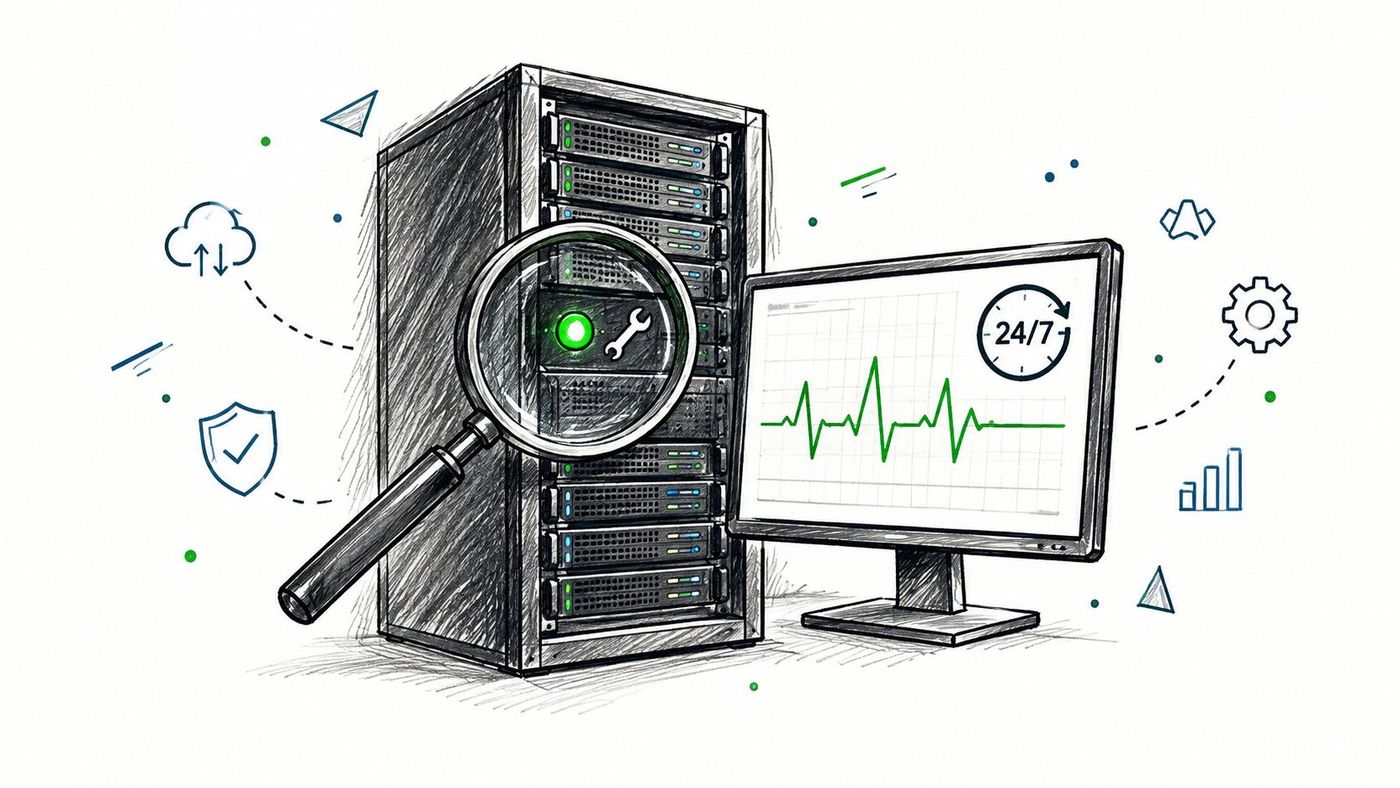
This approach shifts IT management from reactive firefighting to preventive maintenance. Internal teams are freed from constant troubleshooting and can focus on strategic initiatives that drive the business forward.
A Toronto-based logistics company reduced unplanned downtime by 60% after implementing CloudOrbis's proactive monitoring, allowing seamless fleet tracking operations. Meanwhile, a legal firm in Calgary avoided a critical server failure when CloudOrbis detected failing hard drive indicators three weeks in advance, giving them ample time to replace the hardware without disrupting client services.
Proactive monitoring doesn't just prevent downtime. It transforms IT from a cost centre into a strategic asset that supports uninterrupted operations.
For organisations in healthcare, legal, or manufacturing where downtime directly affects compliance, revenue, or safety, this level of continuous oversight is not optional. It is essential. Learn more about remote monitoring and management and how it can protect your operations.
Among the most critical managed service benefits for small and mid-sized businesses is access to enterprise-grade cybersecurity that would otherwise require a dedicated internal security team and a six-figure budget. Managed service providers layer threat detection, vulnerability assessments, endpoint protection, and compliance management into a unified defence strategy, customized to your organization's specific risk profile and regulatory obligations.

This multi-layered approach catches threats that basic antivirus software misses. Ransomware, phishing campaigns, and insider threats are identified early through continuous monitoring and behavioural analysis, often before damage occurs.
A healthcare clinic in Edmonton prevented a ransomware attack when CloudOrbis's threat detection flagged suspicious lateral movement within its network, isolating the affected segment before encryption could spread. Meanwhile, a manufacturing company in Calgary successfully passed SOC 2 compliance audits after implementing CloudOrbis's security framework, opening doors to larger client contracts that had previously been out of reach.
For organizations navigating complex regulatory requirements, pairing these protections with data liability minimization tips can further strengthen your overall security posture.
Cybersecurity is not a product you buy once. It is an ongoing discipline that demands constant adaptation, and managed services make that discipline accessible to businesses of every size.
Learn more about threat detection and response and how managed cybersecurity can protect your operations from evolving threats.
One of the most tangible managed service benefits for SMBs is replacing unpredictable IT expenses with fixed, monthly costs. Instead of scrambling to cover emergency repair bills or surprise hardware failures, organizations gain a clear financial framework. Consolidating licensing, support, maintenance, and cloud services into a single managed services agreement reduces financial surprises.

This predictability lets finance teams forecast with confidence. Capital expenditure shifts to operational expenditure, freeing up cash flow for growth initiatives rather than emergency reserves.
A construction firm in Toronto cut annual IT spending by 35% after transitioning to CloudOrbis's managed services, all while improving service quality and uptime. Similarly, a legal practice in Calgary eliminated $8,000 to $12,000 in annual emergency support bills by adopting a fixed monthly agreement. Both organizations reported that predictable costs made budgeting simpler and reduced internal stress around IT planning.
Fixed monthly pricing doesn't just simplify accounting. It removes the financial anxiety that comes with unpredictable technology failures and gives leadership confidence in long-term planning.
For construction firms managing tight project margins or legal practices balancing client budgets against operational costs, predictable IT spending removes a major source of financial uncertainty. Learn more about total cost of ownership and how it applies to managed IT investments.
Among the most compelling managed service benefits for growing businesses is the ability to scale IT infrastructure on demand without sinking capital into physical servers. Managed cloud services let organizations expand or contract resources based on actual workload demands, eliminating the guesswork of hardware procurement and the risk of over-provisioning.
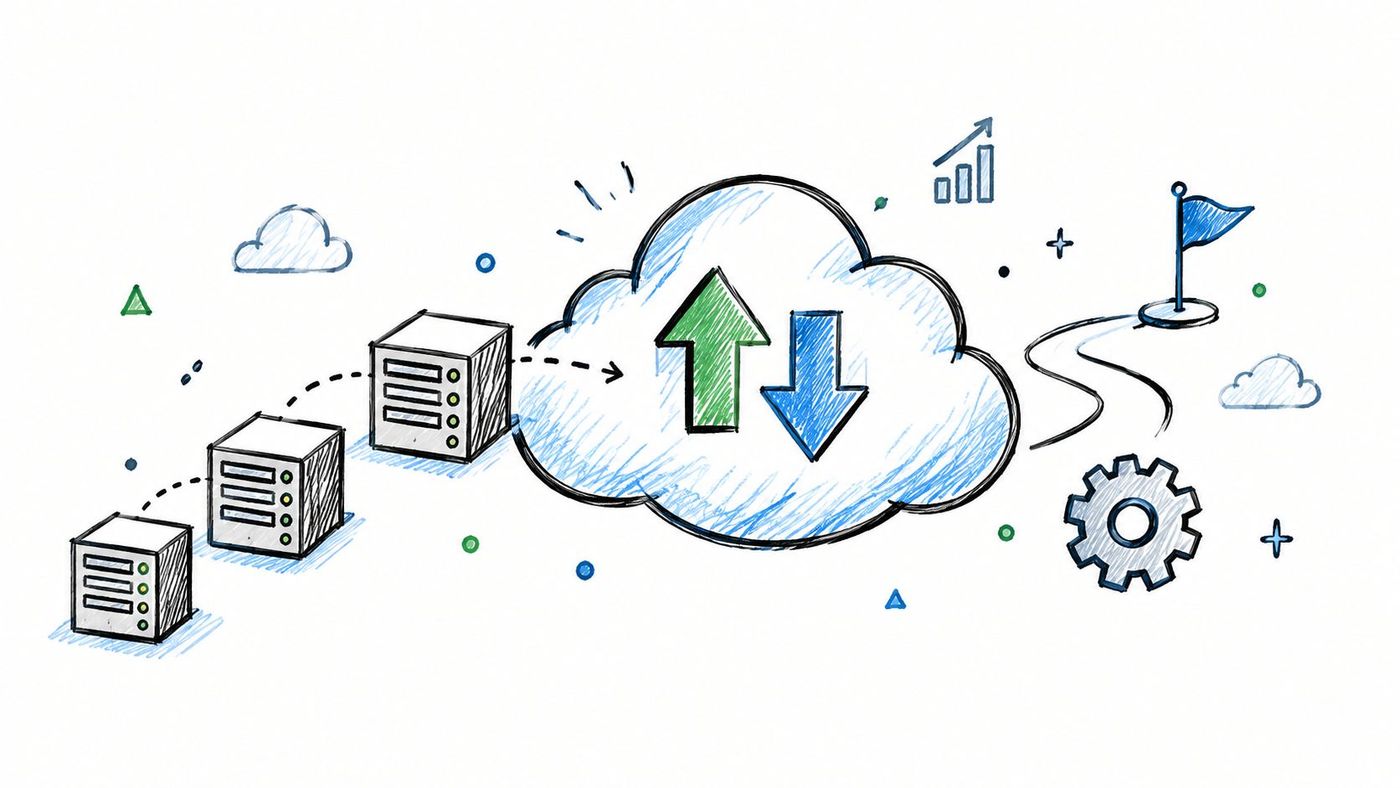
This flexibility is especially valuable for businesses with seasonal demand spikes or rapid growth trajectories. Rather than waiting weeks for new equipment, teams can provision additional storage, computing power, or collaboration tools within hours.
A manufacturing company in Edmonton migrated from a legacy ERP system to Dynamics 365 with CloudOrbis's guidance, improving production scheduling accuracy by 25%. Meanwhile, a healthcare provider in Toronto completed a full Microsoft 365 migration with zero patient data loss and cut on-premises infrastructure costs by 40%.
Cloud migration done right doesn't just move data. It reshapes how a business operates, making it more agile and cost-efficient.
For businesses in manufacturing, healthcare, or professional services where uptime and data integrity are non-negotiable, a structured migration plan separates a smooth transition from a costly disruption. Learn more about Azure migration services and how they can support your cloud journey.
Among the most critical managed service benefits for SMBs is the assurance that your data survives whatever comes your way. Managed backup and disaster recovery services maintain secure, redundant copies of critical systems and files, enabling rapid restoration after ransomware attacks, hardware failures, natural disasters, or simple human error. These services go beyond basic file copying by incorporating point-in-time recovery, regular testing, and automated failover capabilities.
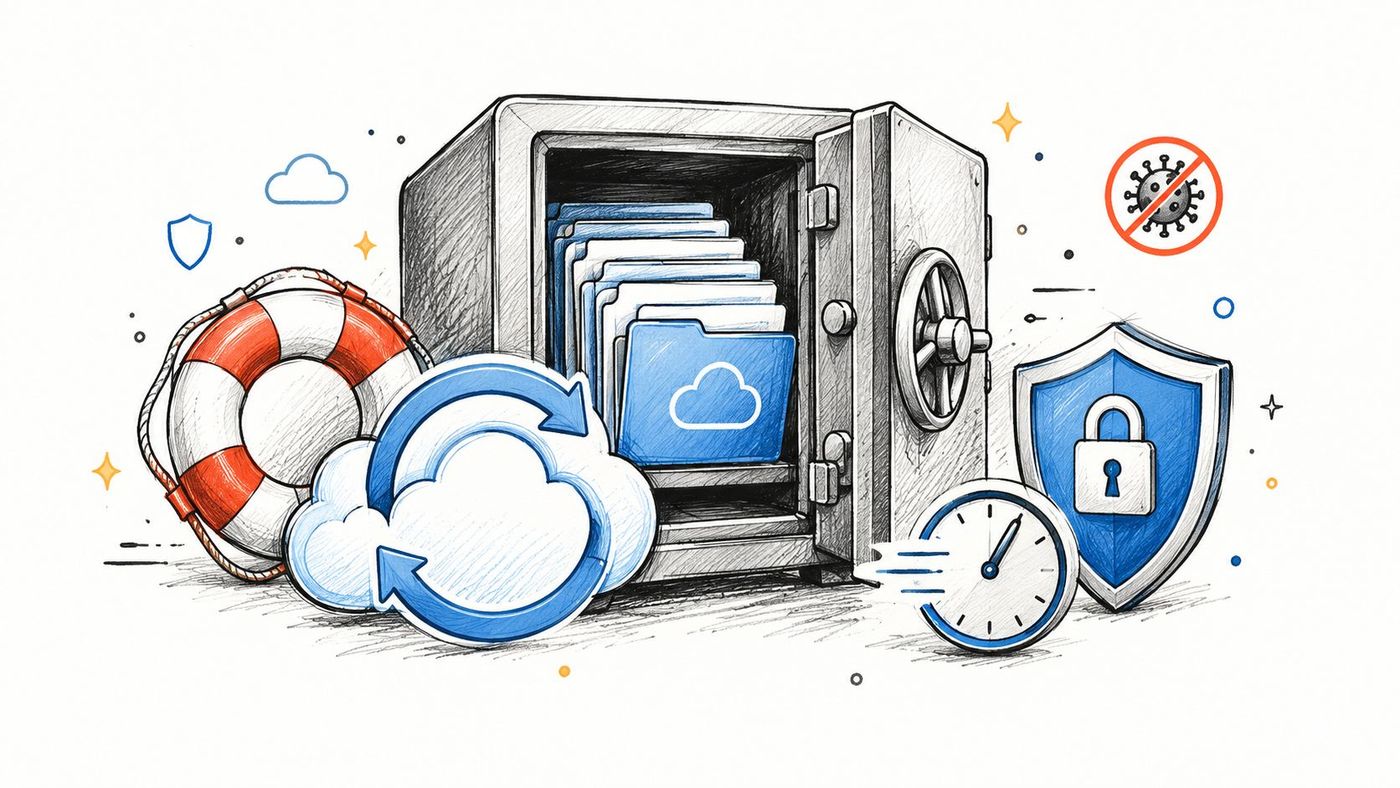
Without a tested recovery plan, even a minor incident can cascade into days of downtime, lost revenue, and damaged client trust. Managed providers reduce that risk by building redundancy into every layer of your data infrastructure.
A legal firm in Calgary recovered from a ransomware attack within four hours using CloudOrbis backup systems, minimizing client impact and avoiding the six-figure ransom demands that cripple unprepared organizations. Meanwhile, a healthcare clinic in Toronto passed privacy and security audits with backup and recovery documentation that demonstrated clear business continuity readiness, satisfying regulators without last-minute scrambling.
A backup you have never tested is not a safety net. It is a gamble with your operational future.
For organizations in healthcare, legal, or finance where data loss carries regulatory and financial consequences, robust backup and recovery is not a luxury. It is a baseline requirement. Learn more about data backup and recovery strategies and how they can safeguard your operations.
One of the most practical managed service benefits for SMBs is gaining immediate access to a full bench of IT specialists without the overhead of hiring full-time staff. Managed service providers (MSPs) bring together cloud architects, security analysts, network engineers, and compliance officers under one engagement, giving your organization capabilities that would otherwise require six or more individual hires.
This model is especially valuable for businesses that need niche expertise for specific projects or ongoing compliance requirements. Rather than scrambling to recruit scarce talent, you tap into a team that has already solved similar challenges across multiple industries.
A construction firm in Edmonton worked with CloudOrbis's vCIO services to build a three-year technology roadmap, aligning IT spending with planned business expansion. Meanwhile, an oil and gas company in Calgary partnered with CloudOrbis specialists to modernize legacy systems and roll out cloud-based collaboration platforms across distributed field teams.
Access to specialized expertise on demand lets SMBs compete with larger organizations that have dedicated departments for every IT function.
For SMBs leveraging managed IT services, nearshore staffing services provide access to specialized talent without the overhead of full-time hires. This approach works well for organizations in healthcare, legal, or oil and gas where regulatory knowledge and technical depth are both non-negotiable.
For organizations operating in regulated industries, managed service benefits extend far beyond day-to-day IT operations. Managed service providers (MSPs) take on the heavy lifting of compliance monitoring, documentation management, and audit preparation, turning what is often a source of anxiety into a structured, repeatable process.
Rather than scrambling to gather evidence before an audit deadline, businesses with MSP support maintain continuous compliance posture. Automated tools track control effectiveness, flag deviations in real time, and generate the documentation regulators expect to see.
A healthcare clinic in Toronto strengthened its privacy and security controls with CloudOrbis support, enabling expansion to additional service lines and improving patient trust. Meanwhile, a financial services firm in Calgary successfully passed its PCI DSS Level 1 audit after implementing CloudOrbis's compliance framework, avoiding the penalties and reputational damage that come with failed assessments.
Compliance is not a checkbox exercise. It is an ongoing discipline that requires dedicated expertise and consistent execution.
For healthcare providers, financial firms, and any organization handling sensitive data, compliance support from an MSP reduces risk while freeing internal teams to focus on core business objectives. Learn more about compliance services and how they can simplify your next audit.
Among the most forward-looking managed service benefits is the ability to align every IT investment with your broader business goals. Rather than treating technology as a series of isolated fixes, strategic roadmapping creates a phased plan that identifies modernization opportunities and ensures each initiative directly supports growth.
This approach prevents the common trap of overspending on tools that do not move the needle while underinvesting in systems that could genuinely improve operations. A managed service provider brings cross-industry perspective to help you sequence projects for maximum impact.
A manufacturing company in Edmonton partnered with CloudOrbis to build a digital transformation roadmap covering cloud migration, process automation, and enhanced analytics. The result was a clear path toward Industry 4.0 readiness without disrupting daily production. Meanwhile, a logistics firm in Toronto used strategic technology planning to identify that cloud-based fleet tracking and real-time analytics would improve operational efficiency by 30%, giving leadership the confidence to approve the investment with a measurable return.
A technology roadmap turns IT from a reactive expense into a deliberate growth strategy, ensuring every dollar spent connects to a business outcome.
For SMBs in manufacturing, logistics, or professional services, strategic roadmapping ensures technology spending is intentional and accountable. Learn more about CloudOrbis's strategic IT planning services and how a structured roadmap can guide your next phase of growth.
| Service | Implementation complexity | Resource requirements | Expected outcomes | Ideal use cases | Key advantages |
|---|---|---|---|---|---|
| 24/7 Proactive Monitoring and Maintenance | Medium, tooling, baselining, continuous tuning | Monitoring platform, 24/7 support/SOC, initial setup | Reduced downtime, faster MTTR, predictable operations | Operations requiring high availability and uptime | Early issue detection, proactive fixes, predictable budgeting |
| Advanced Cybersecurity and Threat Protection | High, integrated tools, policies, incident processes | EDR, SIEM, security analysts, training, compliance mapping | Lower breach risk, rapid incident response, regulatory alignment | Regulated or high-risk environments (healthcare, finance) | 24/7 threat detection, compliance support, breach mitigation |
| Cost Predictability and Budget Control | Low–Medium, contract and billing setup, TCO analysis | MSP contracts, financial reporting, licensing consolidation | Predictable monthly costs, improved cash flow, lower TCO | Organizations needing stable IT budgets and forecasting | Fixed pricing, simplified vendor management, predictable spend |
| Scalable Cloud Solutions and Migration | High, migration planning, refactoring, hybrid design | Cloud architects, migration tools, training, cost optimization | Scalable resources, lower CAPEX, improved continuity | Variable workloads, modernization projects, remote work enablement | On-demand scaling, improved resilience, reduced infra footprint |
| Comprehensive Data Backup and Disaster Recovery | Medium–High, RTO/RPO design, testing, failover planning | Backup storage, offsite replication, bandwidth, DR orchestration | Faster recovery, ransomware resilience, regulatory compliance | Data-critical and regulated organizations (healthcare, legal) | Immutable backups, granular recovery, validated failover |
| Enhanced IT Staffing and Specialized Expertise | Low–Medium, onboarding, integration, knowledge transfer | Access to certified specialists, vCIO hours, mentoring programs | Faster initiatives, better decisions, reduced hiring burden | Mid-market firms lacking in-house specialists | Enterprise-grade expertise without full-time hires, strategic advisory |
| Regulatory Compliance and Audit Support | Medium–High, framework implementation, ongoing updates | Compliance tools, audit support, documentation, training | Reduced fines, faster audits, demonstrable due diligence | Highly regulated industries (healthcare, finance, SOC 2, PIPEDA) | Automated monitoring, audit readiness, continuous evidence management |
| Strategic Technology Roadmapping and Digital Transformation | Medium, assessments, stakeholder alignment, governance | vCIO, executive time, assessment tools, change management | Aligned IT investments, prioritized roadmap, measurable ROI | Organizations planning multi-year transformation and growth | Clear strategic roadmap, prioritized initiatives, improved adoption |
This article covered eight managed service benefits that directly address the most common pressures facing SMBs across healthcare, manufacturing, legal, finance, construction, energy, and other industries. The question now is simple: where does your organization actually stand?
Honestly assess your environment against each benefit area:
Identifying even two or three of these gaps is enough to justify a closer look at managed services.
Before reaching out to any provider, prepare internally:
This preparation makes any conversation with a managed service provider far more productive.
When evaluating an MSP partnership, verify these specific areas:
A partner that scores well across all seven areas delivers genuine long-term value beyond basic helpdesk support.
For organizations in Toronto, Calgary, Edmonton, and across Canada, CloudOrbis Inc. offers managed IT, cybersecurity, cloud migration, backup, vCIO, and 24/7 Canada-based helpdesk services. The 10-step engagement process is designed to assess your current environment, align technology with business goals, and implement managed service benefits without unnecessary disruption.
Whether you need full co-managed support for your internal IT team or a complete outsourced model, the starting point is the same: an honest assessment of where you are and where you need to be.
The best managed service partnership improves business resilience while keeping leaders focused on growth, not on firefighting infrastructure.
Ready to identify which managed service benefits matter most for your organization? CloudOrbis Inc. provides free assessments, managed IT, cybersecurity, cloud, backup, and vCIO services designed for Canadian SMBs. CloudOrbis Inc. can help you build a clear IT action plan tailored to your priorities.
Book a 30-minute call with a senior engineer. No sales script, just straight answers about your environment.


